Understand Seville
History of Seville: a city built in layers
Phoenicians, Romans, Visigoths, Almohads, Castilians, merchants of the Indies and the architects of two world fairs. Each era left something you can still see as you walk.
Seville has close to three thousand years of history. It was the land of Tartessos and a Phoenician trading post, Roman Hispalis beside Itálica, Andalusi Isbiliya for more than five centuries, a Castilian city from 1248, the port of the Indies in the sixteenth century and the stage for the Expos of 1929 and 1992. Each era left monuments you can still see.
Key timeline
The dates worth keeping in mind to understand what you see in the street.
| Date | What happens | Where to see it today |
|---|---|---|
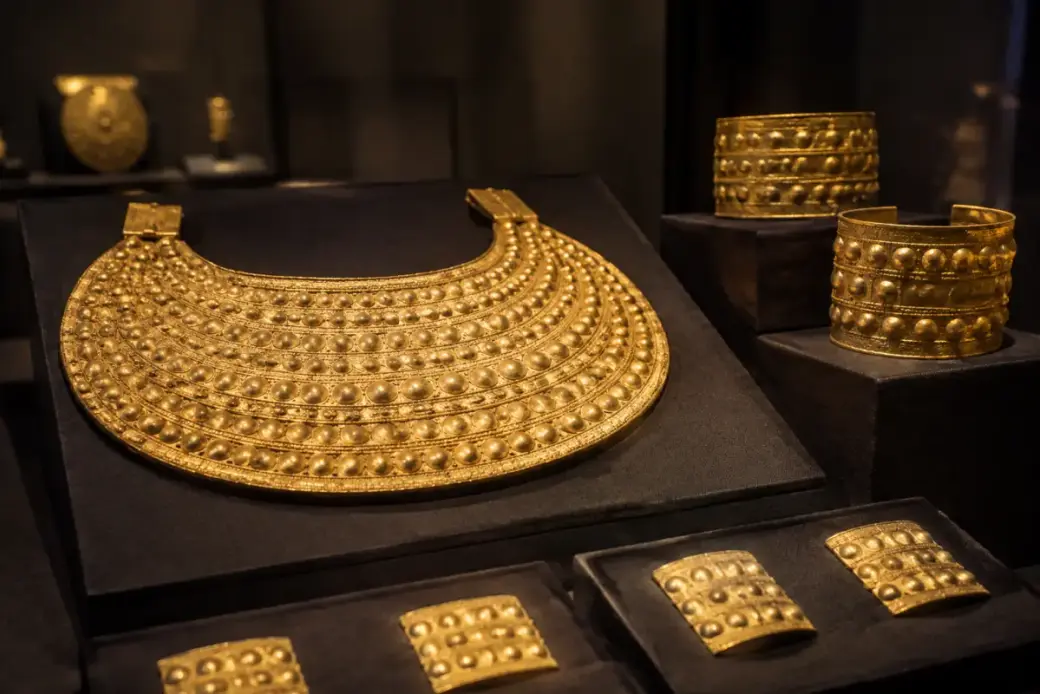
| 8th–6th centuries BC | Tartessian culture and Phoenician trade in the lower Guadalquivir. | The El Carambolo treasure, in the Archaeological Museum. |
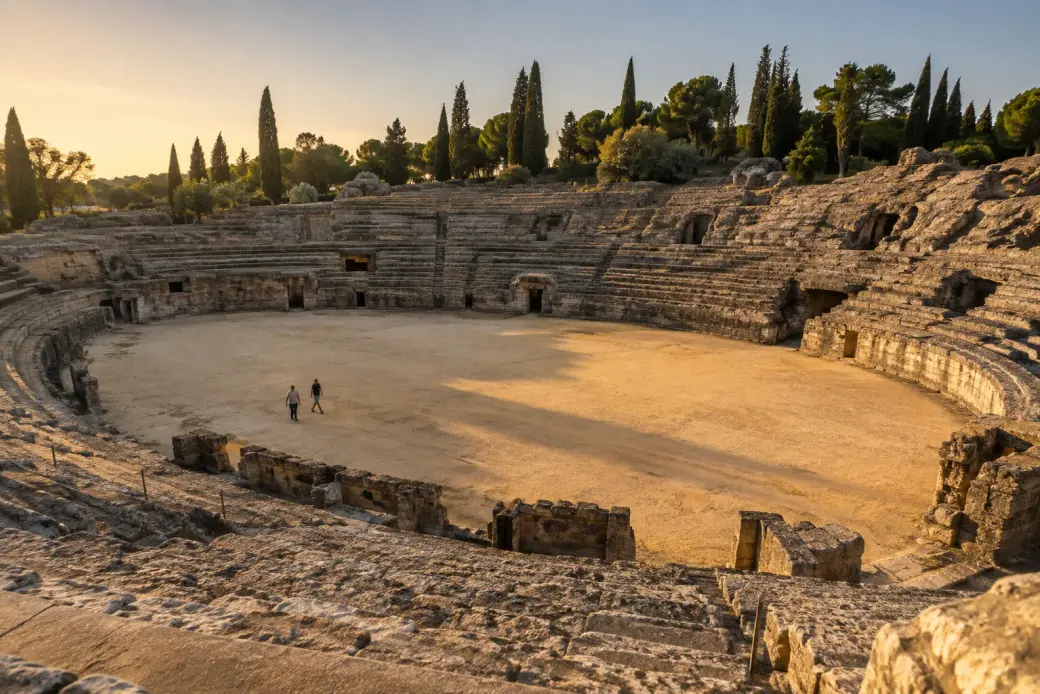
| 206 BC | Scipio founds Itálica, a few kilometres from today’s Seville. | Itálica. |
| 1st century BC | Hispalis becomes a Roman colony. | The Alameda columns and the Antiquarium under the Setas. |
| 6th–7th centuries | Visigothic Seville: bishops Leander and Isidore. | Few visible traces; their memory lives on in the city. |
| 712 | Muslim conquest: Isbiliya is born. | The city walls and the layout of many streets. |
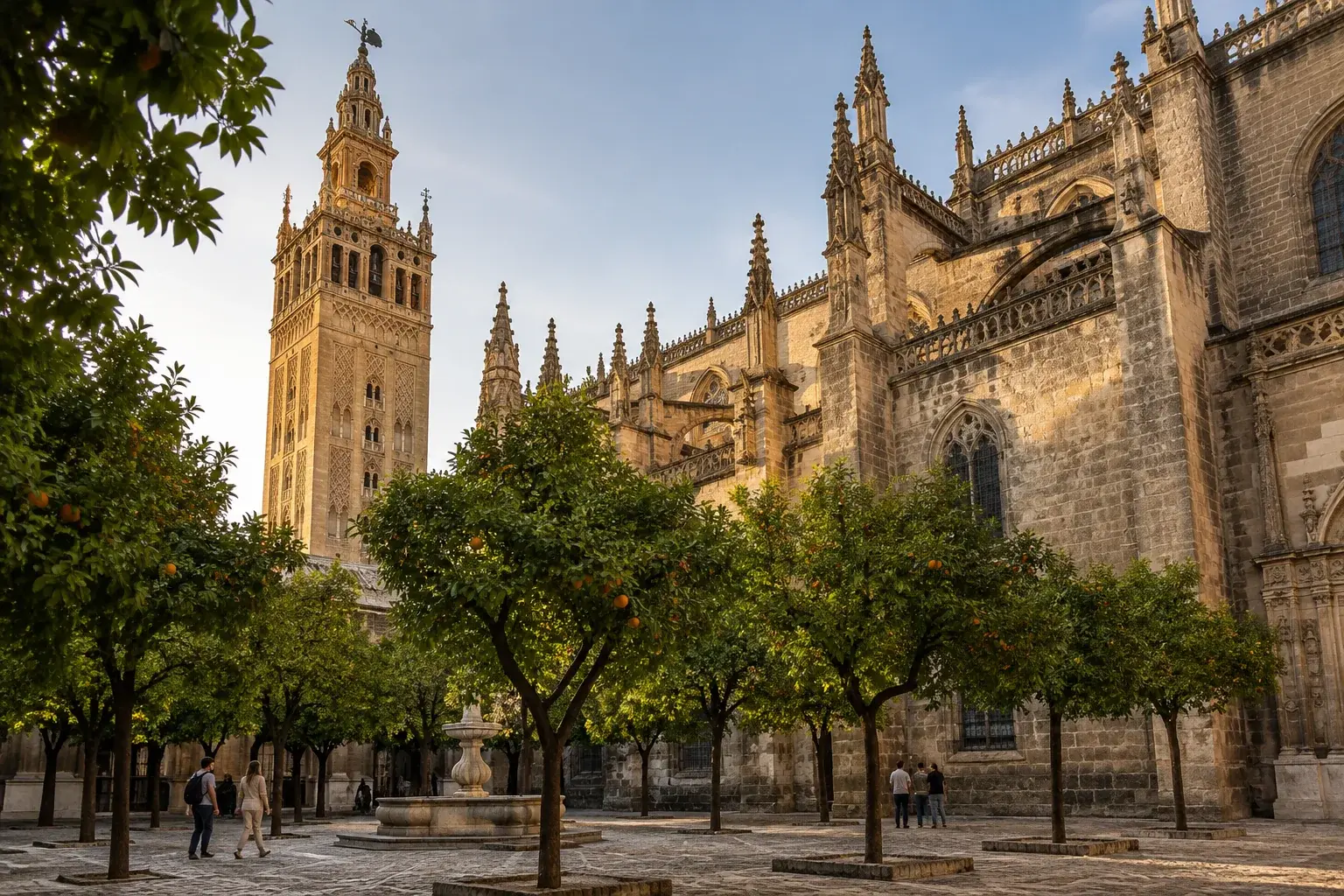
| 1172–1198 | The Almohads build the great mosque and its minaret. | The Giralda and the Courtyard of the Orange Trees. |
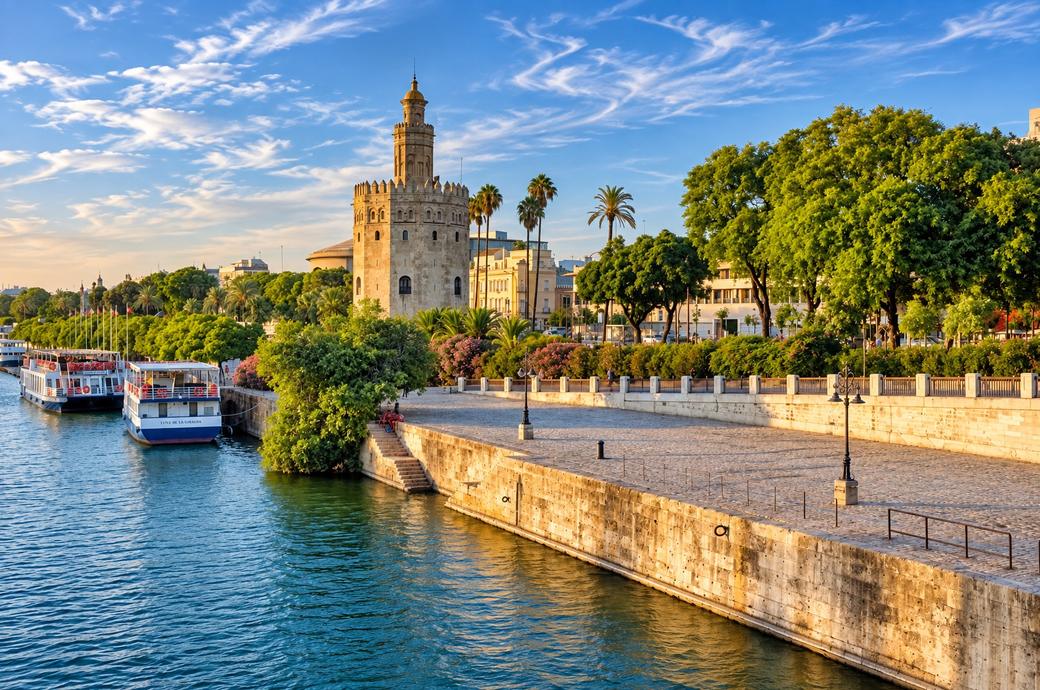
| 1220–1221 | The watchtower by the river is built. | The Torre del Oro. |
| 1248 | Fernando III conquers the city for Castile. | His tomb in the Cathedral. |
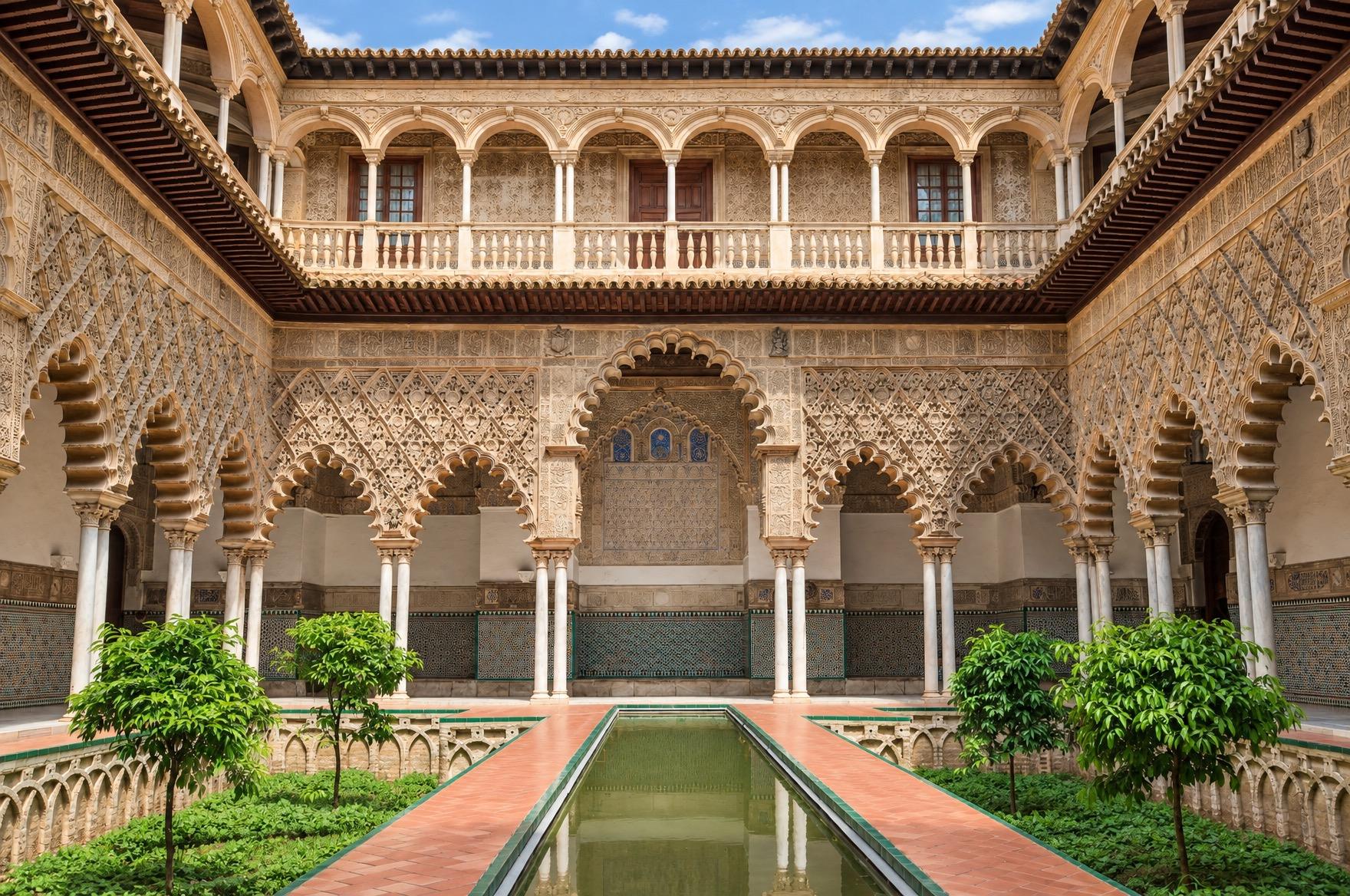
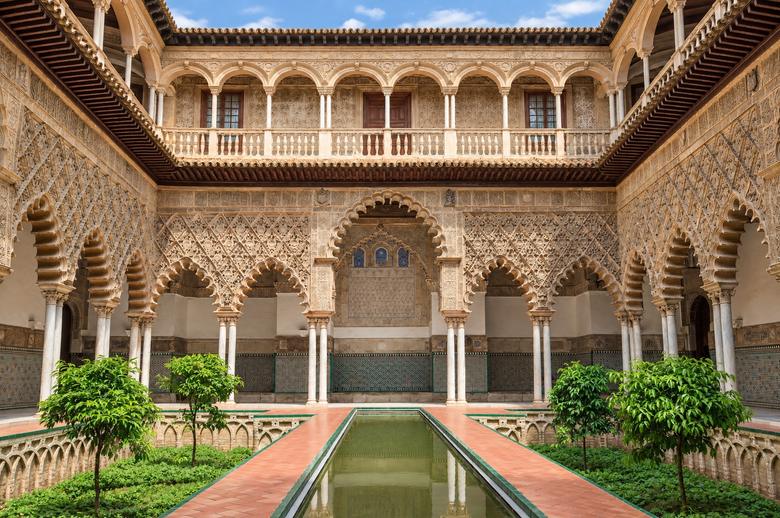
| c. 1364 | Pedro I builds his Mudéjar palace. | The Real Alcázar. |
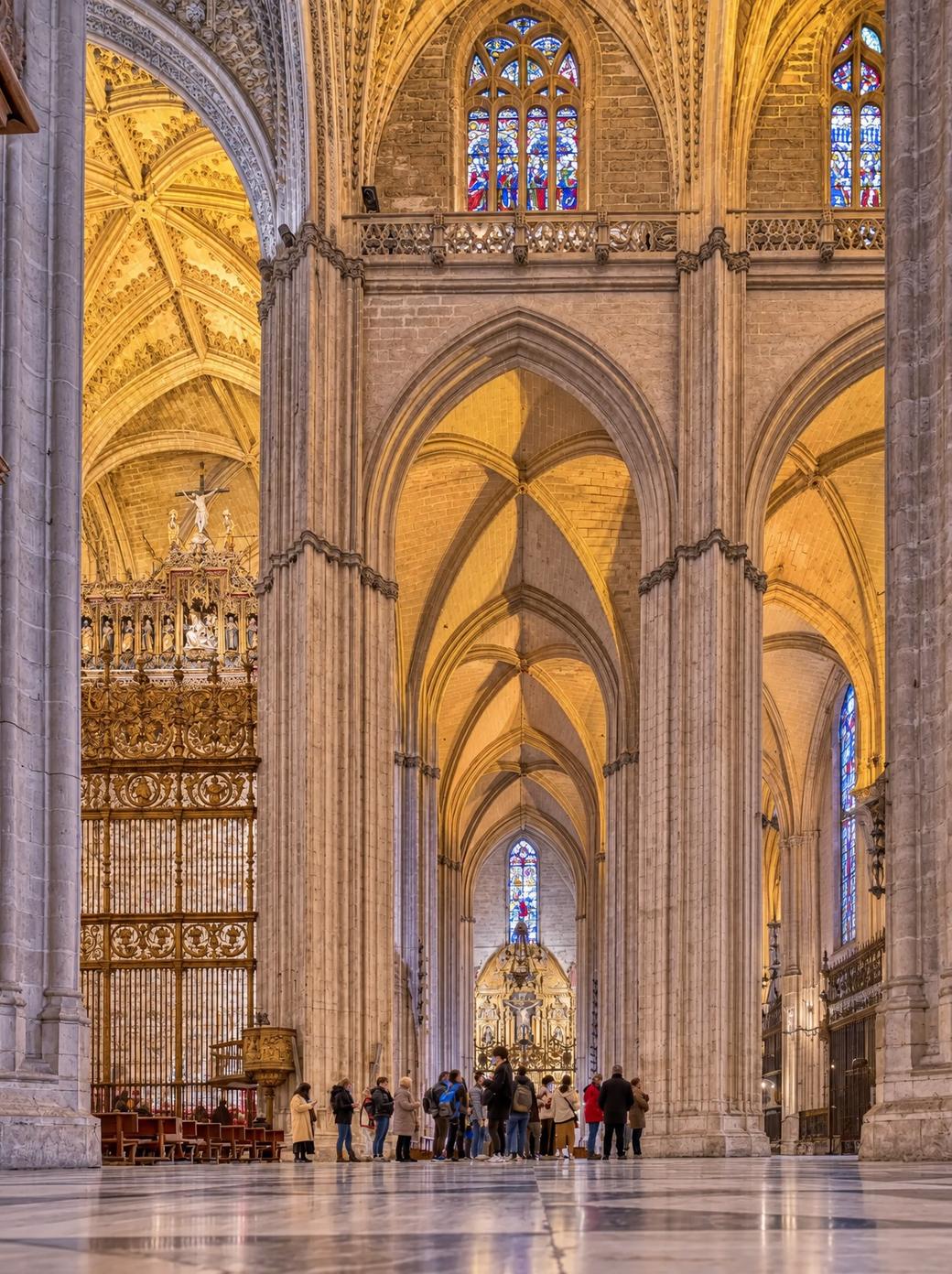
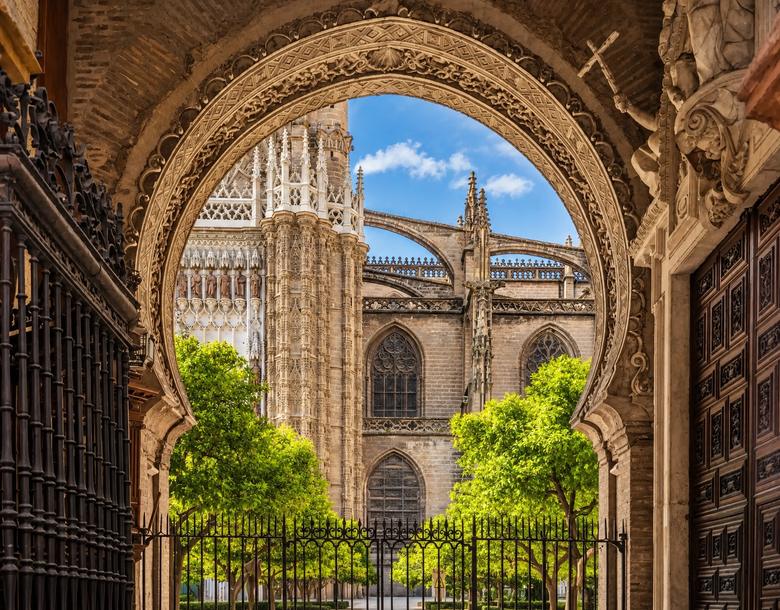
| 15th century–1506 | The Gothic Cathedral is built over the mosque. | The Cathedral. |
| 1503 | The House of Trade is created: monopoly of trade with the Americas. | The Alcázar and the Archive of the Indies. |
| 1519–1522 | Magellan’s expedition leaves Seville; Elcano completes the first circumnavigation. | The Arenal and the riverbank. |
| 1649 | A plague epidemic kills a large part of the population. | The end of an era of splendour. |
| 1717 | The House of Trade moves to Cádiz. | Cádiz, heir to the trade. |
| 1847 | The April Fair is born as a livestock fair. | The April Fair. |
| 1929 | Ibero-American Exposition. | Plaza de España and María Luisa Park. |
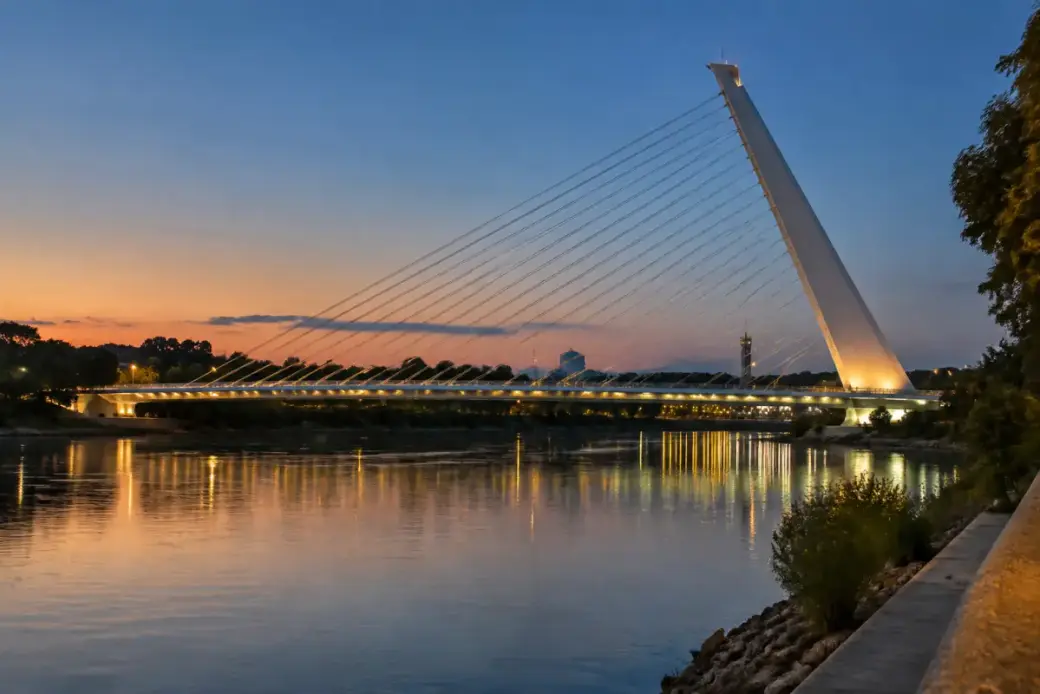
| 1992 | World Expo on the island of La Cartuja. | The bridges and pavilions of La Cartuja. |
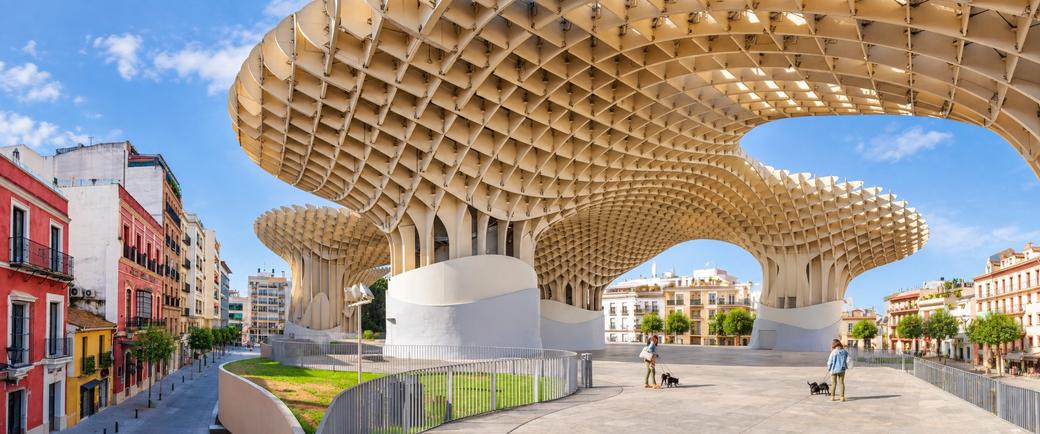
| 2011 | The Setas de la Encarnación open. | Alternative Seville. |
The origins: Tartessos and the Phoenicians
Long before Seville existed, the lower Guadalquivir was a land rich in metals, livestock and farming. Here flourished the culture the Greeks called Tartessos, famous in antiquity for its wealth. The Phoenicians, the great traders of the Mediterranean, came for the region’s silver and copper and left their mark on objects, temples and customs.
The symbol of that era is the El Carambolo treasure, a set of gold jewellery found in 1958 on a hill in Camas, next to Seville. It is displayed in the city’s Archaeological Museum and sums up what this land was: a crossroads between the local and what arrived by sea. That idea — Seville as a port and a meeting place — runs through its whole history.
Hispalis and Itálica: Roman Seville
The Romans arrived in the middle of the war against Carthage. In 206 BC Scipio founded Itálica to settle his wounded soldiers, a few kilometres from the city. Itálica would be the birthplace of two emperors, Trajan and Hadrian, and today it is one of Spain’s great archaeological sites.
Meanwhile, the settlement by the river grew as Hispalis, a river port granted colony status in the first century BC. Remains of that city lie underground, like those displayed beneath the Setas, and two columns from a Roman temple were moved to the Alameda de Hércules in the sixteenth century. Hispalis already played the role Seville would repeat for centuries: the valley’s outlet to the sea.
Visigothic Seville
After the fall of the Roman Empire, Seville was one of the main cities of Visigothic Hispania. Its name in that period is linked to two brothers who were bishops: Leander, who promoted the kingdom’s conversion to Catholicism, and Isidore, author of the «Etymologies», an encyclopaedia read all over Europe during the Middle Ages.
Few buildings from those centuries survive, but the city remembers them: Saint Isidore and Saint Leander give their names to churches, streets and convents in the centre, and the Church in Seville venerates them as patrons alongside Saints Justa and Rufina, Triana potters martyred in Roman times.
Isbiliya: five centuries of Andalusi Seville
In 712 the city passed into Muslim hands and became Isbiliya, one of the great cities of al-Andalus. For more than five centuries it was the capital of a taifa kingdom with poet-kings such as al-Mutamid, a seat of the Almoravids and, above all, the capital of the Almohads, who transformed it.
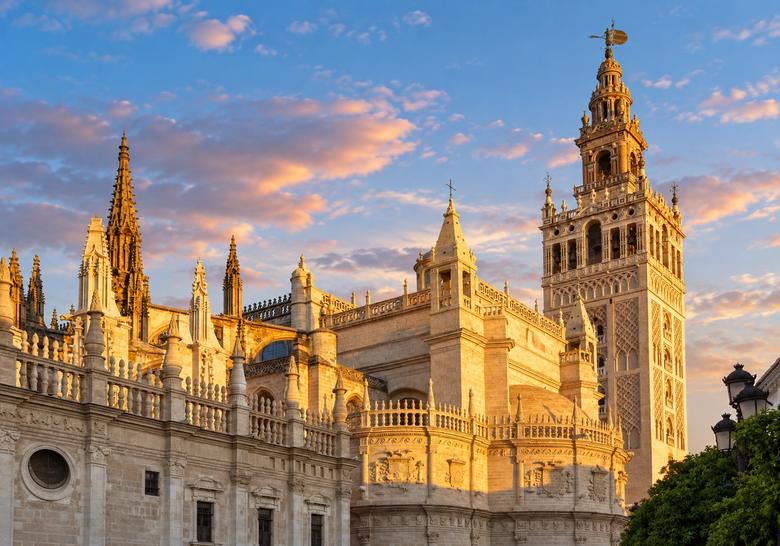
We owe the Almohads much of what we now associate with Seville: the great mosque, whose Courtyard of the Orange Trees survives, and its minaret, today’s Giralda; the enlarged city walls; the palaces at the origin of the Alcázar; and the Torre del Oro, which guarded the port. We also inherited from them the narrow, winding streets of the centre, designed to provide shade.
If the people of this era interest you, some of their stories — such as that of al-Mutamid and the poet Itimad — are told on the Seville stories and legends tour.
1248: Castilian Seville
In November 1248, after a long siege, Fernando III of Castile entered Seville. The city was resettled with people from the north and organised into parishes, many built on former mosques: the origin of so many churches and squares in the centre. The great mosque was consecrated as a cathedral and remained in use until, in the early fifteenth century, the chapter decided to build a new church.
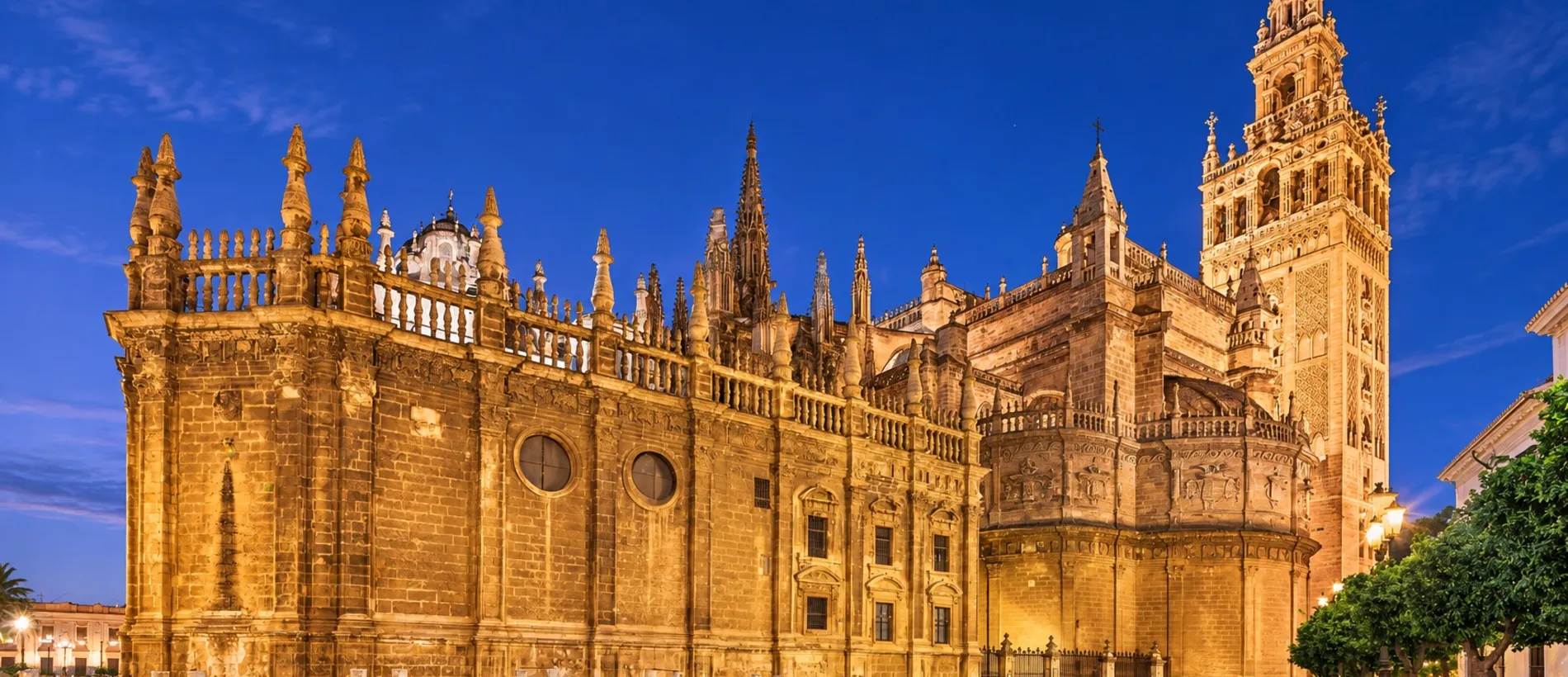
That new Gothic Cathedral, completed in 1506, is one of the largest in the world and keeps the Giralda as its bell tower. Earlier, around 1364, King Pedro I had built a palace in the Alcázar with Mudéjar craftsmen, blending the Andalusi tradition with the power of a Christian king. That blend — Islamic art in the service of Castile — is one of the keys to understanding the city.
Port of the Indies: Seville’s golden age
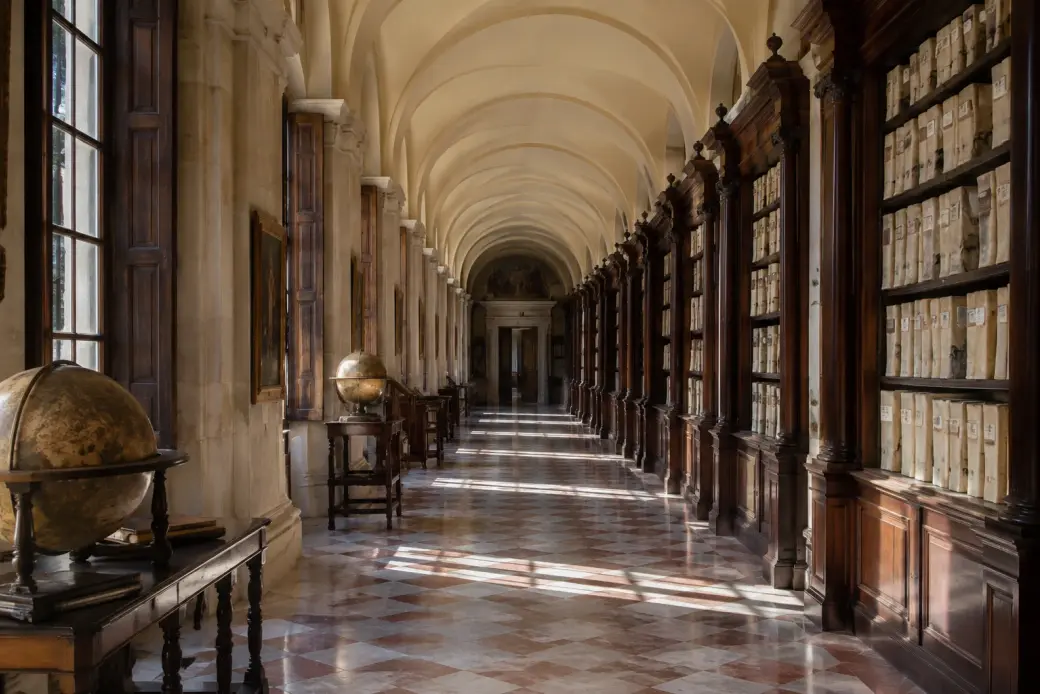
After Columbus’s voyages, the Crown chose Seville as the sole gateway for trade with the Americas. In 1503 the House of Trade was created, housed in the Alcázar, controlling ships, goods, passengers and the silver arriving from the Indies. The city became one of the richest and most populous in Europe, full of bankers, merchants, artists and adventurers from all over the continent.
In 1519 Magellan’s expedition set out from here, and in 1522 Juan Sebastián Elcano returned after completing the first circumnavigation of the globe. The sixteenth and seventeenth centuries also gave Seville many of its Baroque churches, its palace-houses and the great painting of Murillo, Zurbarán and Velázquez, who was born here. Cervantes lived in the city and portrayed it in his novels. To grasp the scale of that trade, visit the Archive of the Indies, which holds its written memory.
Plague, crisis and the move to Cádiz
The splendour came to an abrupt end. In 1649 a plague epidemic killed a large part of the population and the city never fully recovered its pulse. At the same time, the Guadalquivir was becoming harder for large ships to navigate, and trade gradually shifted to the Bay of Cádiz.
In 1717 the House of Trade officially moved to Cádiz. Seville lost its monopoly but not its artistic wealth: the eighteenth century left buildings as monumental as the former Royal Tobacco Factory, now the University, and the Maestranza bullring.
Tobacco, Romantic travellers and festivals
In the nineteenth century, Romantic travellers turned Seville into a myth: the city of the Tobacco Factory’s cigar makers, bullfighters, flamenco and courtyards. From that imagery came Carmen, Mérimée’s novella that Bizet made into an opera. It was also the century when Triana Bridge opened (1852), convents were demolished to open squares and, in 1847, the April Fair was born.
Holy Week, with much older roots, took on much of its present form during that period. We cover both in our guides to Holy Week and the April Fair.
1929 and 1992: two Expos that changed the city
In the twentieth century Seville reinvented itself twice with two world fairs. The 1929 Ibero-American Exposition transformed the south of the city: María Luisa Park, Aníbal González’s Plaza de España, Plaza de América and dozens of pavilions that are now museums, consulates or university faculties. Its regionalist style, in brick and ceramics, defined the image of modern Seville.
The 1992 World Expo was held on the island of La Cartuja, next to the monastery where Columbus stayed. It brought new bridges over the Guadalquivir, Santa Justa station, the high-speed train to Madrid and a leap in infrastructure that is still felt today.
Seville today
In 1987 UNESCO declared the Cathedral, the Alcázar and the Archive of the Indies a World Heritage Site. In 2011 the Setas de la Encarnación opened, the symbol of a city that blends heritage and contemporary architecture. Today Seville is the capital of Andalusia, a university city and one of the most visited destinations in Spain.
The fascinating thing is that all these layers coexist on a single walk: a Roman column, an Almohad minaret, a Mudéjar palace, a Gothic cathedral, a Baroque church, a nineteenth-century square and a twenty-first-century structure. Knowing how to read them is what turns a walk into a visit.
María’s guided tour
Alcázar, Cathedral and Santa Cruz
Three places that sum up much of this history, told in the order in which they were built.
See the tourFrequently asked questions
Who founded Seville?
There was no single founding. The site was inhabited from Tartessian times and the Phoenicians traded in the area; the Roman city of Hispalis is the direct predecessor of today’s Seville. Legend attributes its founding to Hercules.
How long was Seville under Muslim rule?
A little over five centuries, from 712 until the conquest by Fernando III in 1248.
Why was Seville so important in the sixteenth century?
Because it held the monopoly of trade with the Americas through the House of Trade, created in 1503. Everything going to or coming from the Indies passed through its port.
Which monuments best sum up its history?
The Giralda and the Courtyard of the Orange Trees (Almohad), the Real Alcázar (Mudéjar), the Cathedral (Gothic), the Archive of the Indies (American trade) and Plaza de España (1929).
You may also like
 Seville guide · MonumentsMonumentsWhat each monument is, how long it takes and how to combine it.Read the guide
  Monuments · Real AlcázarReal AlcázarLearning to read the layers of a thousand-year-old palace.Read the guide
  Monuments · CathedralCathedral and GiraldaScale, functions and symbols of the great cathedral.Read the guide
  Private tour · StoriesStories and legendsKings, lovers and betrayals: the Seville that is told.See the tour
Shall we talk about your visit?
Tell María when you are coming, how many of you there are and what interests you. She will reply with a clear proposal.
Ask María about a tour