Understand Seville
Holy Week in Seville: how to understand it and experience it
For one week, the whole city is organised around its brotherhoods. Art, faith, music and tradition take to the streets. This guide explains what you are seeing and how to enjoy it respectfully.
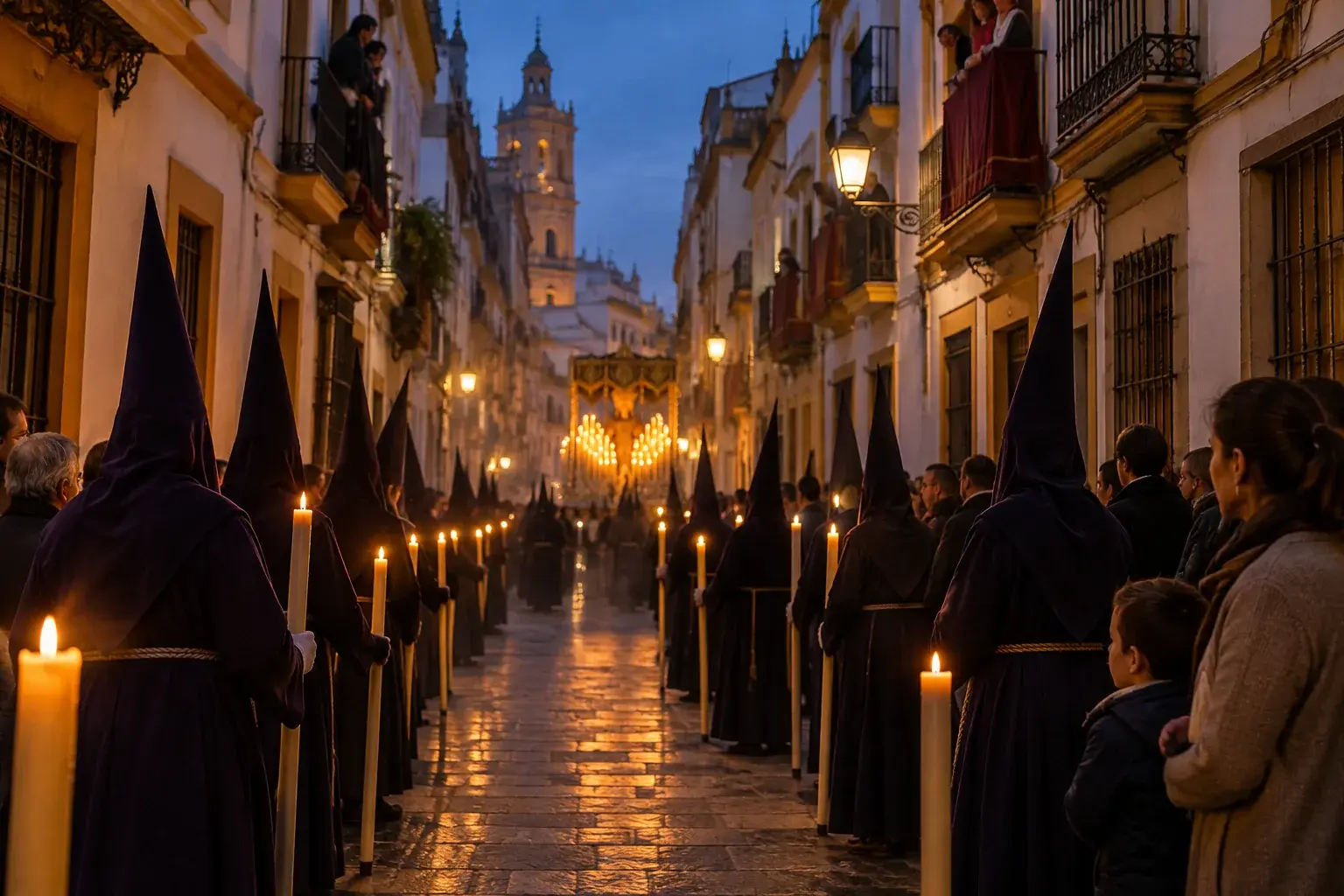
Holy Week in Seville runs from Palm Sunday to Easter Sunday. More than sixty brotherhoods process from their churches to the Cathedral along the carrera oficial, with pasos (floats) carried by costaleros and accompanied by nazarenos. The most intense night is the Madrugá, from Maundy Thursday into Good Friday.
What Holy Week in Seville is
It is a religious celebration commemorating the Passion, death and resurrection of Christ, but in Seville it is also an artistic, social and musical event that involves the whole city, whatever each person’s faith. Its protagonists are the hermandades or cofradías — brotherhoods of the faithful who spend the whole year preparing their procession.
Each brotherhood leaves its church, crosses the centre to the Cathedral and returns home. It carries one or more pasos: large platforms bearing images of Christ or the Virgin, many of them masterpieces of Baroque sculpture by artists such as Juan Martínez Montañés or Juan de Mesa. Around them work embroiderers, silversmiths, florists, candle makers and musicians: Holy Week sustains many of the city’s crafts.
Key terms to understand it
- 1Hermandad or cofradíaThe brotherhood that organises the procession.
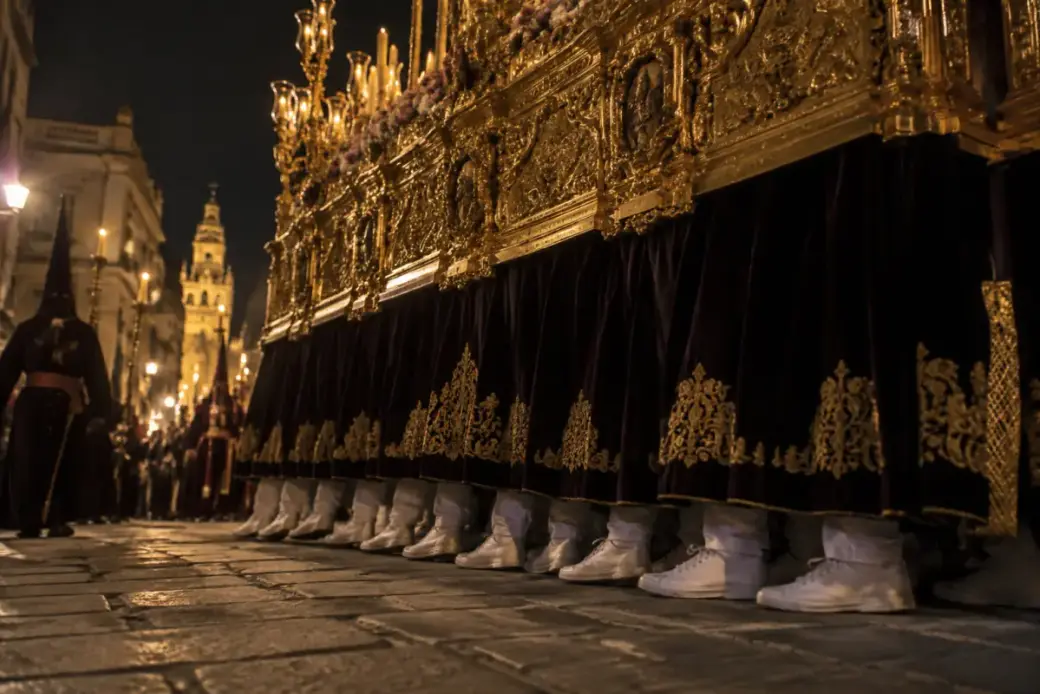
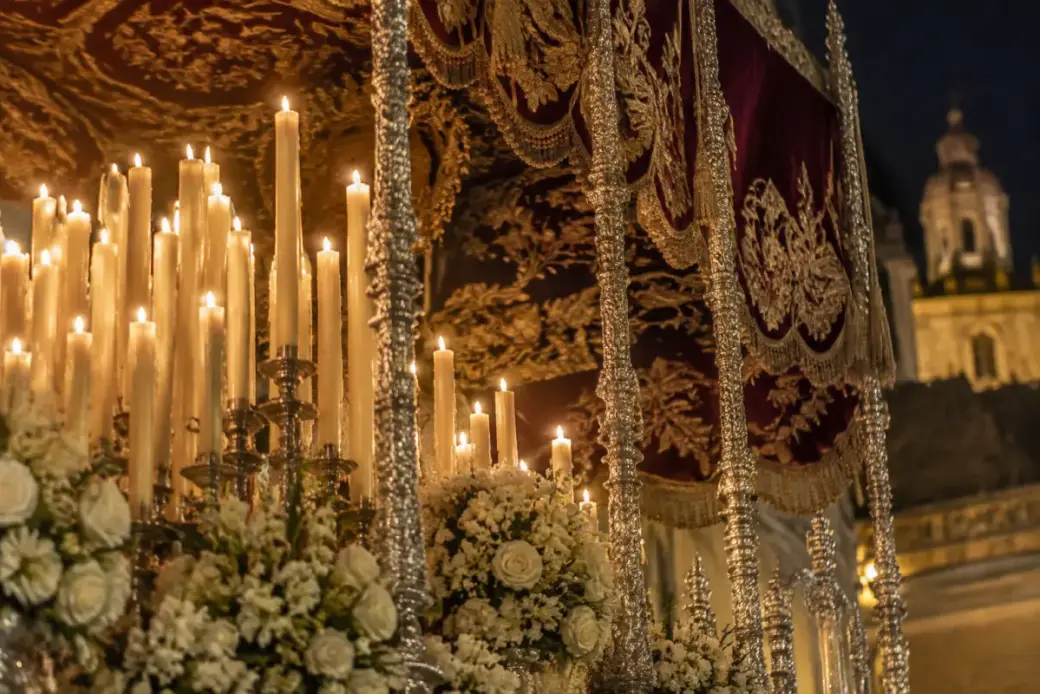
- 2PasoThe platform with the images. The paso de misterio shows a scene of the Passion; the paso de palio carries the Virgin under an embroidered canopy.
- 3CostalerosThe men who carry the paso from inside, unseen, guided by the capataz (foreman).
- 4NazarenosBrotherhood members who accompany the paso in robes and tall pointed hoods, often carrying a candle.
- 5Carrera oficialThe common stretch all brotherhoods follow on their way to the Cathedral.
- 6La MadrugáThe night from Maundy Thursday into Good Friday, with some of the most revered brotherhoods.
- 7Levantá and reviráThe moment the paso is lifted at the foreman’s call, and the turn at a narrow corner.
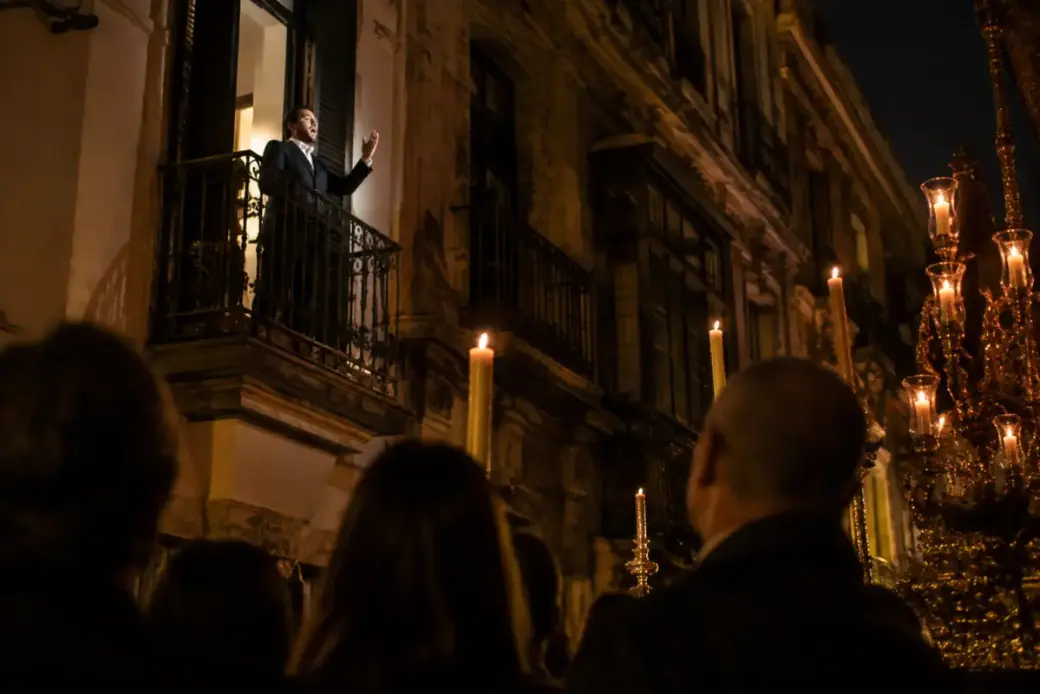
- 8SaetaA spontaneous flamenco song addressed to an image from a balcony.
A little history
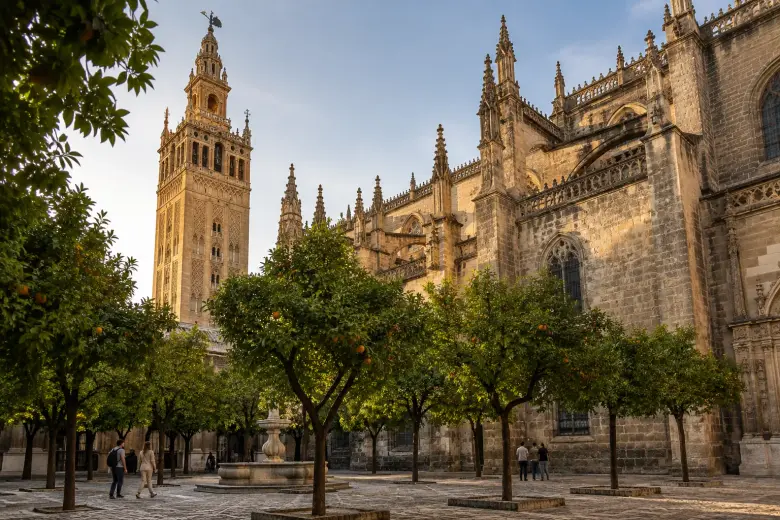
Penitential brotherhoods multiplied in the sixteenth and seventeenth centuries, at the height of the city’s splendour. In the early seventeenth century it was established that all of them should make their station at the Cathedral, which gave rise to the carrera oficial. The Baroque contributed the great images, and in the nineteenth and early twentieth centuries many of today’s features were set: the embroidered canopies, the band music and the organisation of the week. You will find the full context in our history of Seville.
Where and how to watch the processions
| Moment or place | What it offers |
|---|---|
| The departure or return to the church | The emotion of the first and last moments, as the paso passes through a door that is sometimes very narrow. |
| Narrow streets in the centre | Seeing the paso up close and the work of the costaleros on the bends. |
| Triana Bridge | The Triana brotherhoods crossing the river on their way to the Cathedral. |
| The carrera oficial | Paid chairs and boxes with seating; ideal if you want to see several brotherhoods in a row. |
| Around La Macarena | One of the neighbourhoods that lives the Madrugá most intensely. |
Times and routes are published each year: check them before you go out.
Practical tips
- Plan with the itinerariesSeveral brotherhoods go out each day with different times and routes; choose two or three and organise your evening around them.
- Never cross a line of nazarenosWait for a gap between sections or find another street.
- Respect the silenceSome brotherhoods process in complete silence; put away your phone and flash too.
- Footwear and patienceMany hours standing and closed streets: take it calmly and carry water.
- If it rainsBrotherhoods may decide not to go out to protect the images and their treasures.
- AccommodationBook months ahead: it is one of the busiest weeks of the year.
When it is and how it affects your visit
The date changes every year because it depends on Easter, celebrated on the first Sunday after the first full moon of spring. That is why it falls in March or April.
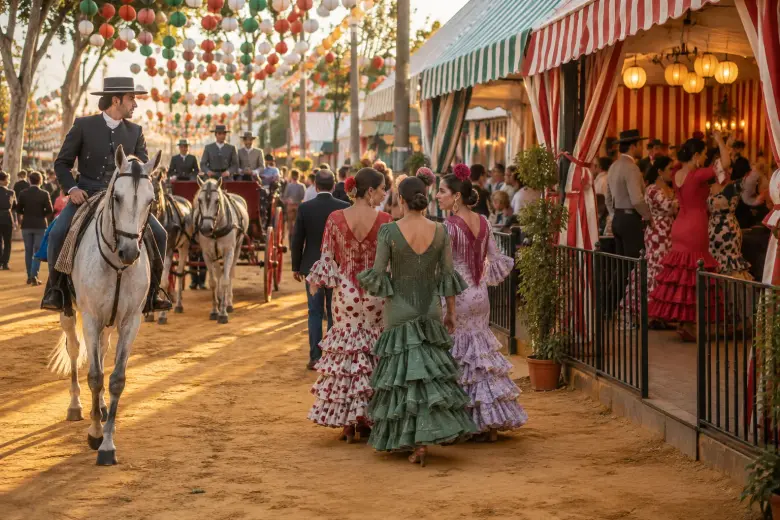
During those days many monuments change their opening hours, some central streets are closed for hours and getting around takes longer. If you come then, accept the city’s rhythm: read our tips from a local guide too. About two weeks later comes the other great celebration, the April Fair.
Frequently asked questions
When is Holy Week in Seville?
From Palm Sunday to Easter Sunday. The date changes every year because it depends on Easter, and it falls in March or April.
What is the Madrugá?
The night from Maundy Thursday into Good Friday, when some of the city’s most revered brotherhoods go out. It is the busiest moment of the week.
Do I have to pay to see the processions?
No. You can watch them free in the street. Only the chairs and boxes on the carrera oficial are paid.
Can I visit Seville normally during those days?
Yes, but with more people, closed streets and different monument opening hours. Plan ahead and book early.
You may also like
 Understand SevilleHistory of SevilleFrom Tartessos to Expo 92: the history of Seville told era by era.Read the guide
  Understand SevilleSeville April FairThe Real, the casetas, the lighting, what to wear and how to enjoy it as a visitor.Read the guide
  Guide · Practical tipsTips from a local guideHeat, tickets, timings and mistakes to avoid.Read the guide
  Neighbourhoods · La MacarenaLa MacarenaWalls, basilica and markets: everyday Seville.Read the guide
Shall we talk about your visit?
Tell María when you are coming, how many of you there are and what interests you. She will reply with a clear proposal.
Ask María about a tour