Understand Seville
Seville April Fair: an ephemeral city of paper lanterns
For one week, a whole district of marquees fills with sevillanas, horses, flamenca dresses and conversation. This guide explains how it works and how to enjoy it even if you know no one.
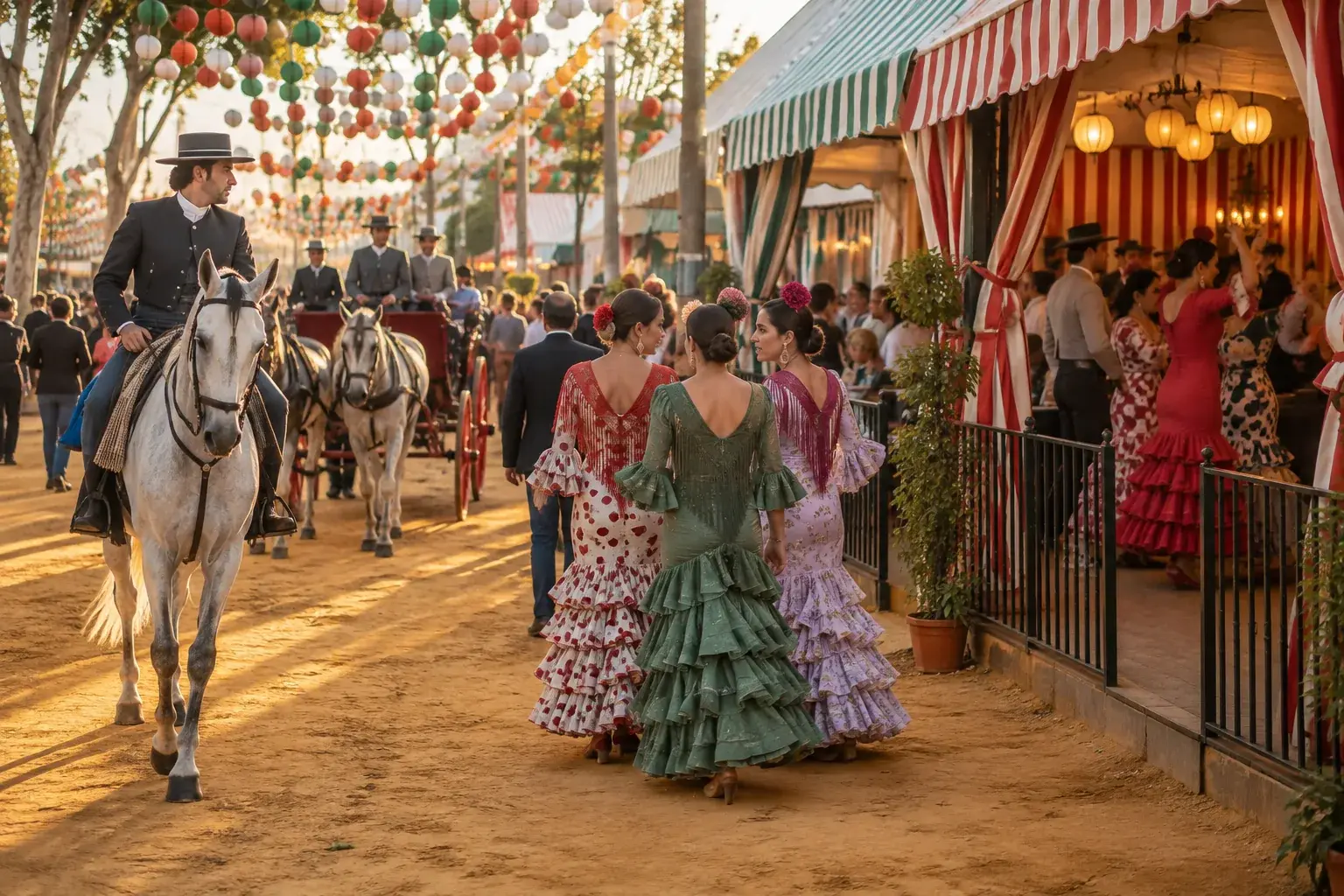
The April Fair is a week of celebration in the Real de la Feria, in the Los Remedios district: more than a thousand casetas (marquees), paper lanterns, sevillanas, flamenca dresses, horse parades and rebujito. It starts with the lighting of the entrance gate and ends with fireworks. It is usually held about two weeks after Holy Week.
From livestock fair to city festival
The Fair was born in 1847 as a livestock fair, proposed by two councillors, José María Ybarra and Narciso Bonaplata. It was held in the Prado de San Sebastián and, within a few years, the trading of animals gave way to what really drew people in: the casetas, the dancing and social life.
In 1973 it moved to its current site in Los Remedios, across the river. Today it is a festival Sevillians feel as their own, with its vocabulary, customs and calendar, and it remains above all a great gathering of families and friends.
The Real de la Feria
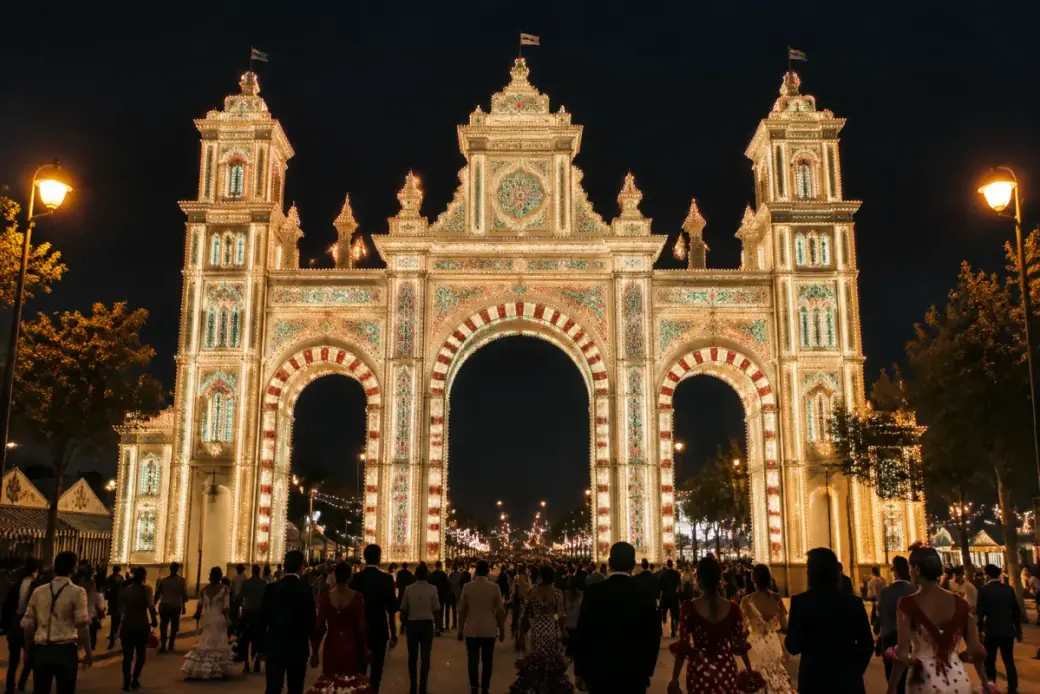
The fairground is called the Real. Its streets, covered in albero (golden sand), are named after bullfighters and lined with more than a thousand striped canvas casetas. You enter through the portada, a great illuminated gate that changes every year and is usually inspired by a Sevillian monument or motif.
Next to the Real is the calle del Infierno, the funfair, with Ferris wheels, stalls and sweet stands: the children’s favourite place.
The casetas: public and private
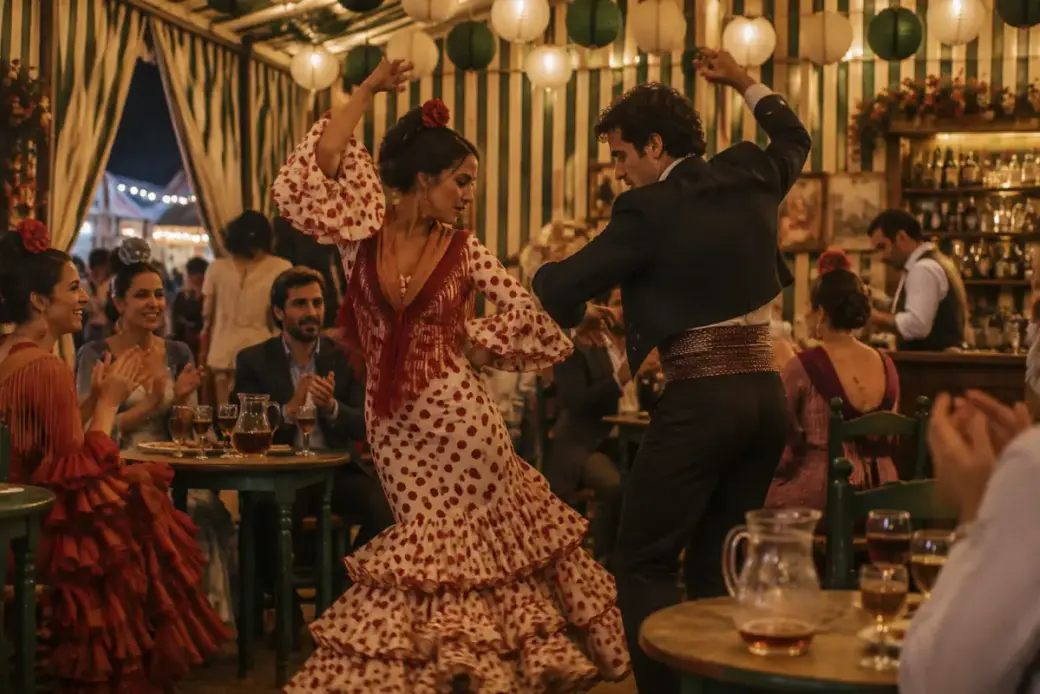
Most casetas are private: they belong to families, groups of friends, associations or companies, and entry is by invitation. Inside, people eat, drink, talk and dance sevillanas. It is normal for someone at the entrance to control access; it is best not to insist.
There are also public casetas, open to everyone, such as those of the city districts and other organisations. They are the best option for visitors without an invitation and let you experience the atmosphere from inside.
What a Fair week is like
- 1Pescaíto nightOn the eve, the casetas open with a dinner of fried fish among friends.
- 2The lightingAt midnight the portada and thousands of lanterns light up: the Fair has officially begun.
- 3Horse-filled middaysRiders and horse-drawn carriages parade through the Real during the day.
- 4Evenings of sevillanasThe casetas fill up and the party goes on into the early hours; there are also bullfights at the Maestranza.
- 5The fireworksOn the last night, fireworks over the river close the Fair until next year.
What to wear
- Flamenca dressMany Sevillian women wear a new one or update it every year; it has its own fashion, with ruffles, a small shawl and a flower.
- Traje cortoThe short riding suit is worn by those on horseback.
- As a visitorSmart clothing is always right; men usually wear a jacket. Avoid costumes.
- FootwearThe sandy ground and long hours on your feet call for comfortable shoes.
What people eat and drink
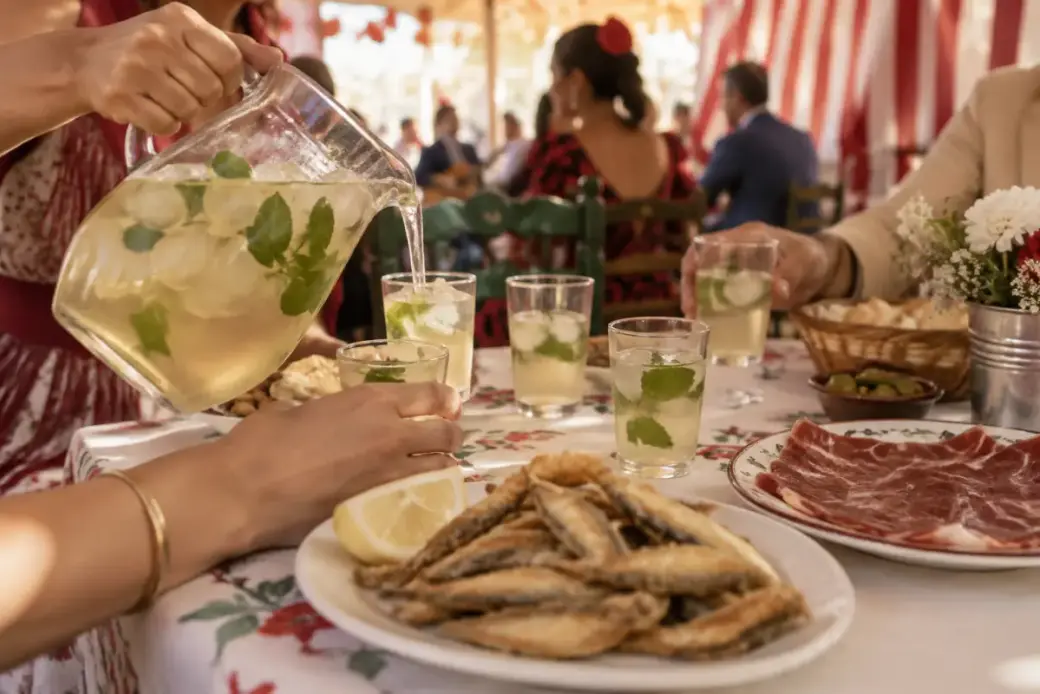
The Fair drink is rebujito, manzanilla or fino mixed with lemon-lime soda and lots of ice, served in jugs to share. Fino and manzanilla are also drunk on their own. To eat, the classics are fried fish, ham, tortilla and each caseta’s stews. And at dawn, for those still standing, hot chocolate with churros. To learn more about Sevillian food, read our guide to tapas and food.
How to enjoy it as a visitor
- Go at middayThe best time to see the horse parade, the dresses and the daytime atmosphere.
- Look for public casetasAsk which ones are open: you can go in, order something and watch sevillanas.
- Come back at nightWith the lanterns lit, the Real changes completely.
- Respect private casetasIf you have no invitation, enjoy the street: that is the Fair too.
- Transport and accommodationUse the extra public transport and book accommodation well in advance.
Each year’s dates
The Fair is usually held about two weeks after Holy Week, so it falls in April and, some years, in May. The exact dates, the portada and the schedule of each edition are published every year by the City Council: always check the official information before planning your trip. For the rest of your stay, our tips from a local guide may help.
Frequently asked questions
When is the April Fair?
It is usually held about two weeks after Holy Week, normally in April. Each year’s dates are published by the City Council.
Can I go into the casetas?
Into the public ones, yes. Most are private and entry is by invitation; please respect that.
What is the alumbrado?
The lighting of the portada and the lanterns at midnight, marking the official start of the Fair.
Do I need to wear a flamenca dress?
It is not compulsory. Many Sevillian women wear one, but as a visitor smart clothes and comfortable shoes are enough.
You may also like
 Understand SevilleHoly Week in SevilleWhat it is, key terms, where to see the processions and practical tips.Read the guide
  Understand SevilleHistory of SevilleFrom Tartessos to Expo 92: the history of Seville told era by era.Read the guide
  Guide · Practical tipsTips from a local guideHeat, tickets, timings and mistakes to avoid.Read the guide
 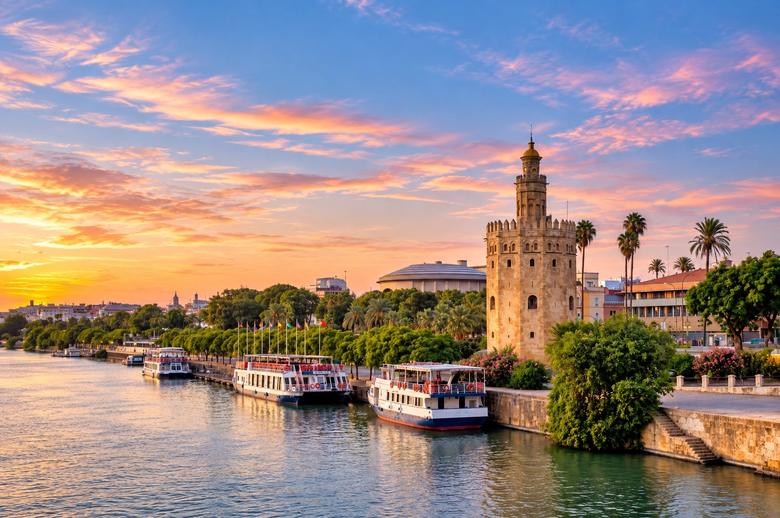 Neighbourhoods · TrianaTrianaCeramics, the river and a distinct identity across the bridge.Read the guide
Shall we talk about your visit?
Tell María when you are coming, how many of you there are and what interests you. She will reply with a clear proposal.
Ask María about a tour