
Private tour · Palace-houses
Palaces of Seville: the city behind the courtyards
Casa de Pilatos, Palacio de las Dueñas and the Countess of Lebrija’s Palace: three houses lived in for centuries that reveal another monumental Seville, more intimate and less obvious than the great icons.
- Format
- Private: just your group
- Area
- Old town, between San Esteban, San Juan de la Palma and Calle Cuna
Another monumental Seville
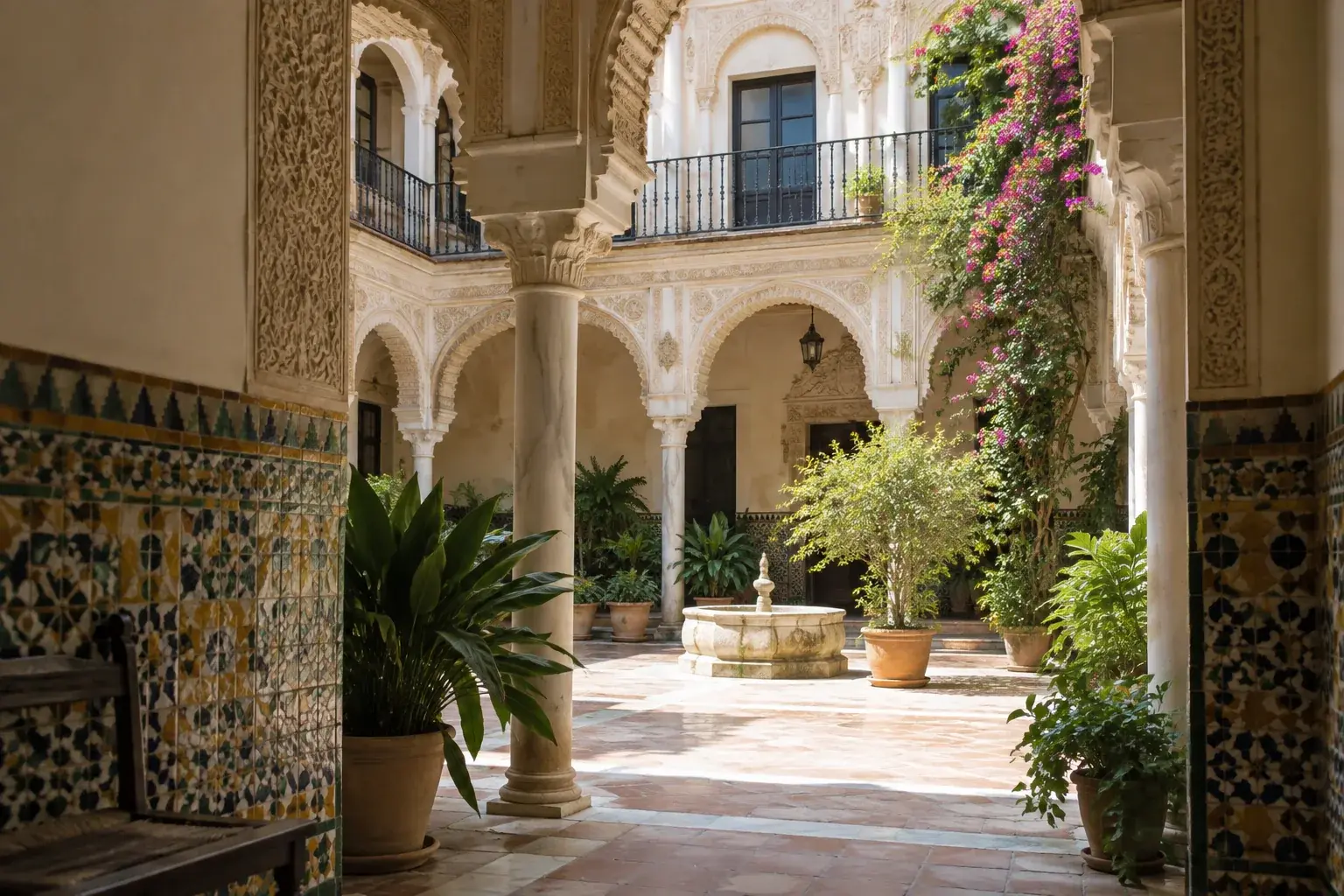
The Alcázar and the Cathedral explain power: that of the king and that of the Church. The palace-houses explain something just as Sevillian: how the nobility lived in the city that controlled trade with the Americas. Behind a sober façade lies a courtyard of columns, fountains and tiles, and the whole life of the house revolves around it.
These houses blend what elsewhere is kept apart: Mudéjar plasterwork, Gothic arches, Italian marble and classical sculpture. That blend is the style we now recognise as Sevillian. And one detail makes them special: they are still homes, with their collections, their gardens and the traces of the families who lived in them.
Three houses, three stories
Casa de Pilatos
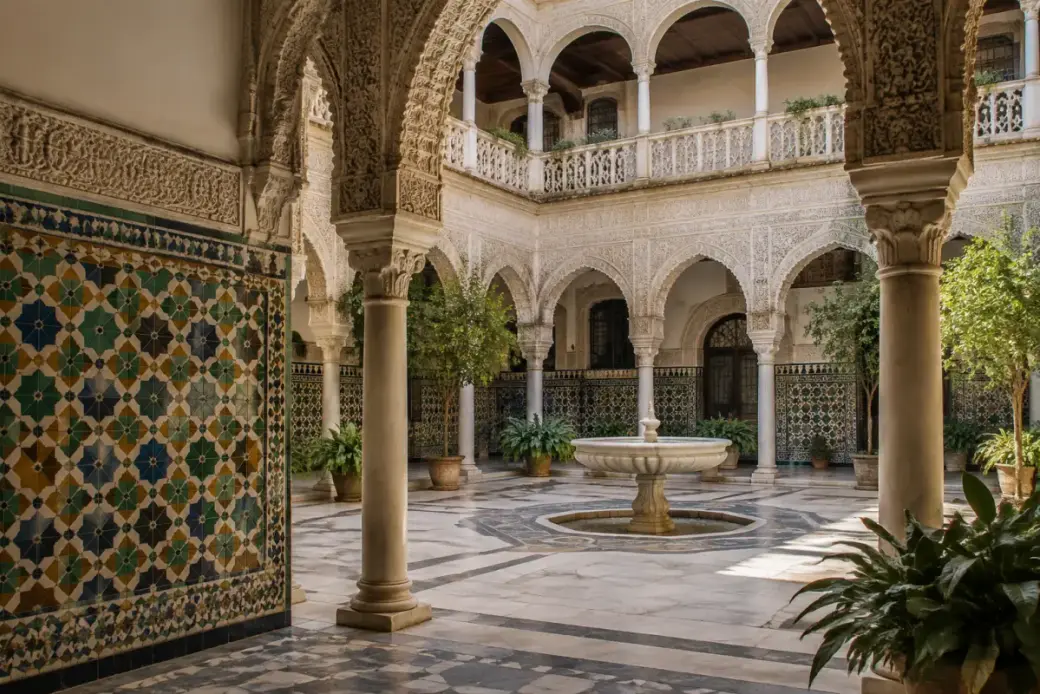
Begun in the late fifteenth century by Pedro Enríquez and Catalina de Ribera, it was enlarged by their son Fadrique Enríquez de Ribera, first Marquis of Tarifa, after his journey to the Holy Land. It combines Mudéjar plasterwork, Gothic balustrades and classical sculpture, and holds one of the most extraordinary sets of tiles in Seville.
Tradition links the house to the Way of the Cross that set out from here towards the Cruz del Campo, which explains the popular name the whole city knows it by.
Palacio de las Dueñas
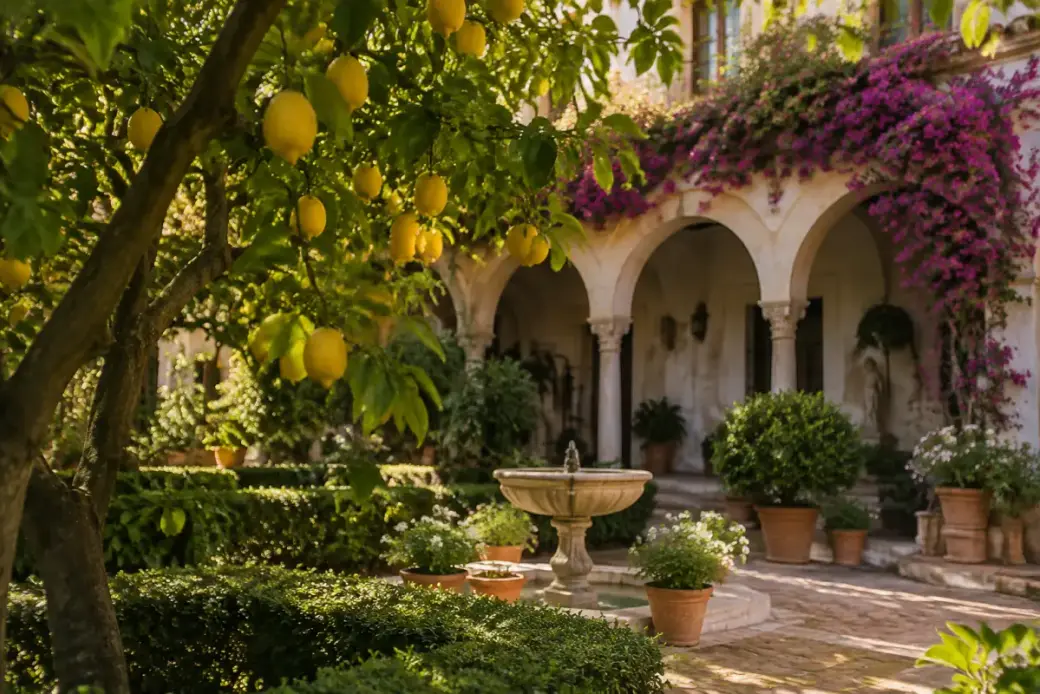
A fifteenth- and sixteenth-century house with courtyards, a garden and an orchard, linked for centuries to the House of Alba and open to the public since 2016. The poet Antonio Machado was born here, the son of the palace’s administrator, and remembered it in his verse: “My childhood is memories of a courtyard in Seville, / and a bright orchard where the lemon tree ripens.”
Walking through it shows the difference between a monument and a home: the objects, portraits and corners tell family stories, not just artistic styles.
Palace of the Countess of Lebrija
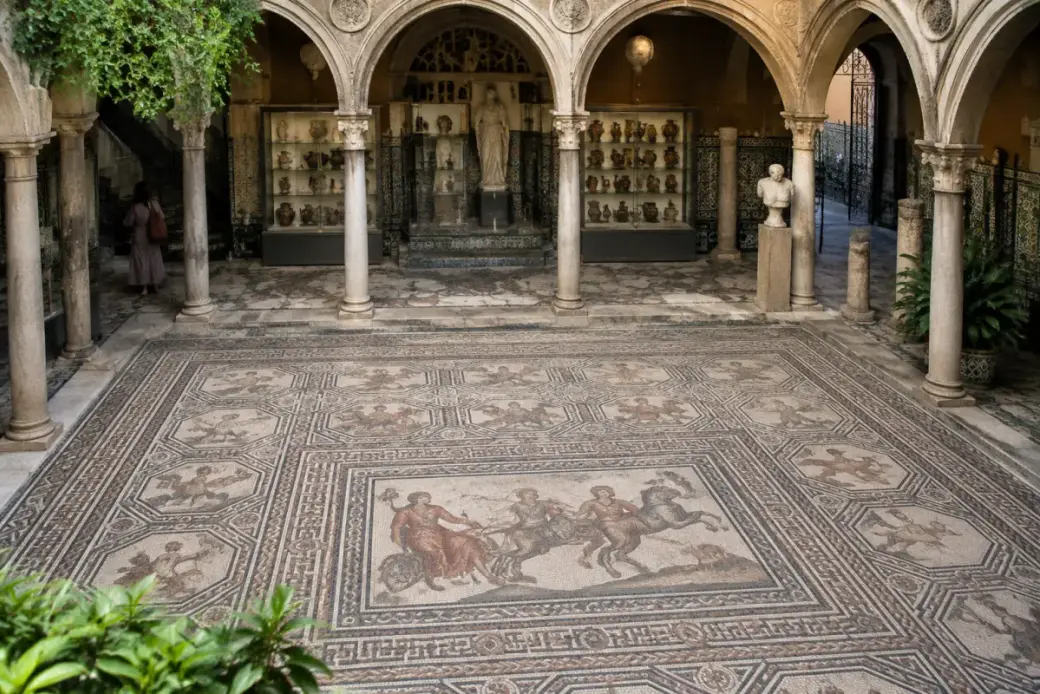
In the early twentieth century Regla Manjón, Countess of Lebrija, turned this house on Calle Cuna into a mirror of her passion for archaeology. Its ground floor is paved with Roman mosaics, many of them from Itálica, and the house brings together ceramics, glass and ancient pieces alongside tiles and coffered ceilings.
It is the best proof that in Seville history is not only collected: you walk on it too.
A sample route
- Casa de PilatosThe largest palace and the best introduction to the Sevillian style.
- Palacio de las DueñasCourtyards, garden and the house where Antonio Machado was born.
- Palace of the Countess of LebrijaRoman mosaics and collections in a sixteenth-century house.
Indicative route. The order depends on each palace’s opening hours and tickets, which María confirms when preparing the tour.
Who this tour is for
It works especially well if you have already seen the Alcázar and the Cathedral — or have them booked — and want to understand the domestic life of Seville’s nobility. Also if you enjoy decorative arts, tiles and architecture, and on very hot or rainy days, since much of the route is spent indoors and in courtyards.
If this is your first visit to Seville, start with Alcázar, Cathedral and Santa Cruz and save the palaces for your second day. To place each house in its period, our history of Seville will help.
Before you go
- TicketsEach palace has its own ticket and opening hours. When preparing your proposal, María explains how they are handled.
- PaceThat is three interiors in one day: better not to add another major monument on the same day.
- To place themOur guide to Seville’s monuments helps you fit the palaces into the city as a whole.
Shall we step inside the palaces?
Tell María when you are coming and how many of you there are; she will suggest the order of the route and explain how tickets are organised.
Frequently asked questions
Which palaces are visited?
Casa de Pilatos, Palacio de las Dueñas and the Palace of the Countess of Lebrija, three palace-houses in the old town that are visited on foot.
Are tickets included?
Each palace has its own ticket. When preparing your proposal, María explains how they are organised and exactly what the tour includes.
Is it the same as visiting the Real Alcázar?
No. The Real Alcázar is a royal palace; this route focuses on noble houses lived in for centuries, with a different scale and way of life.
How much does a private guided tour of Seville cost?
It depends on the length of the tour, the size of your group and whether it includes monuments that require tickets. Send María your date and group size and she will reply with a proposal and its price before anything is confirmed.
Is the tour private?
Yes. Just your group and María, with the pace, breaks and questions you want.
You may also like
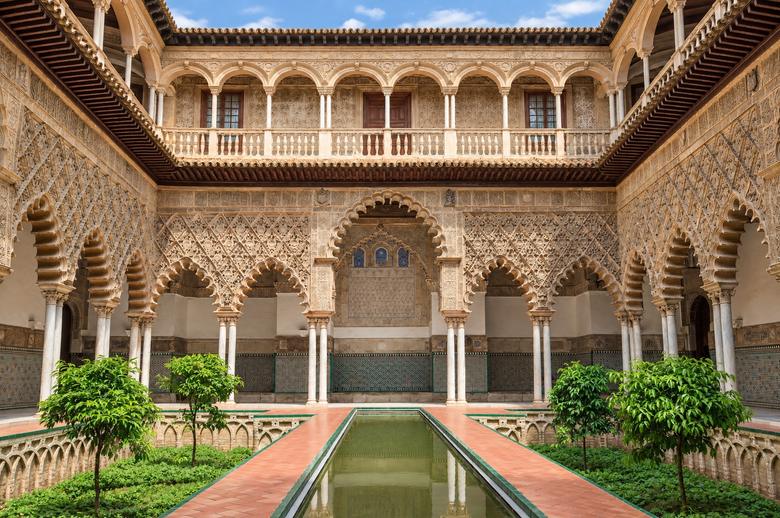 Private tour · Monumental SevilleAlcázar, Cathedral and Santa CruzPalaces, cathedral and the old Jewish quarter, told as a single story.See the tour
 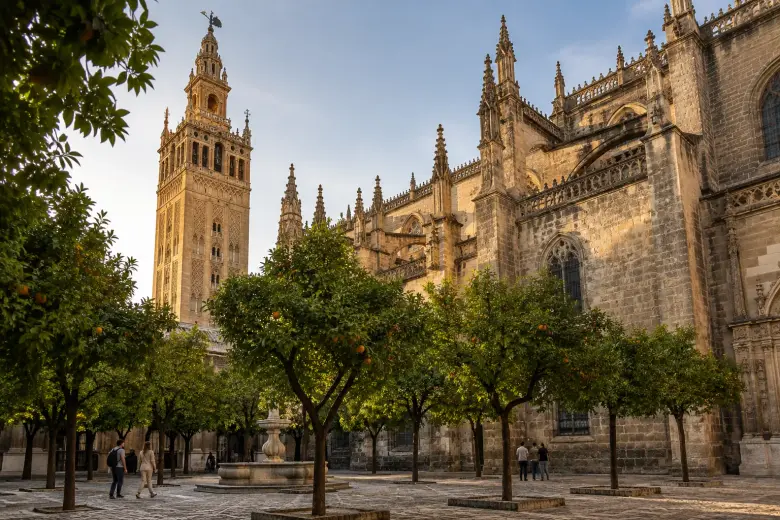 Understand SevilleHistory of SevilleFrom Tartessos to Expo 92: the history of Seville told era by era.Read the guide
 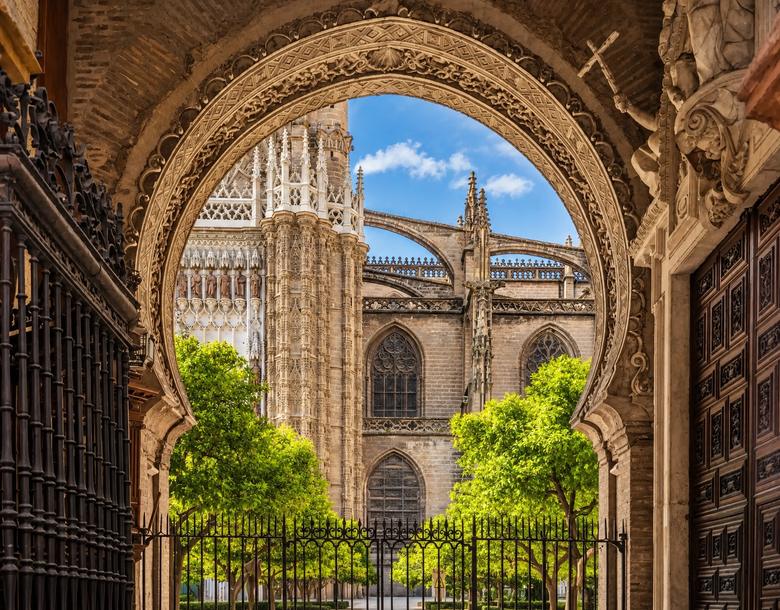 Seville guide · MonumentsMonumentsWhat each monument is, how long it takes and how to combine it.Read the guide
 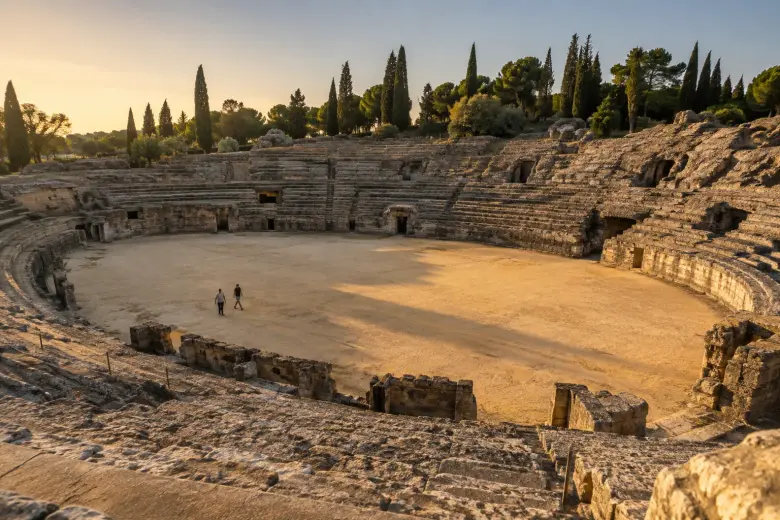 Monuments · ItálicaItálicaThe Roman city of Trajan and Hadrian, 9 km from Seville.Read the guide
Shall we talk about your visit?
Tell María when you are coming, how many of you there are and what interests you. She will reply with a clear proposal.
Ask María about this tour