
Eat Seville
Tapas and food in Seville: what people eat and how they do it
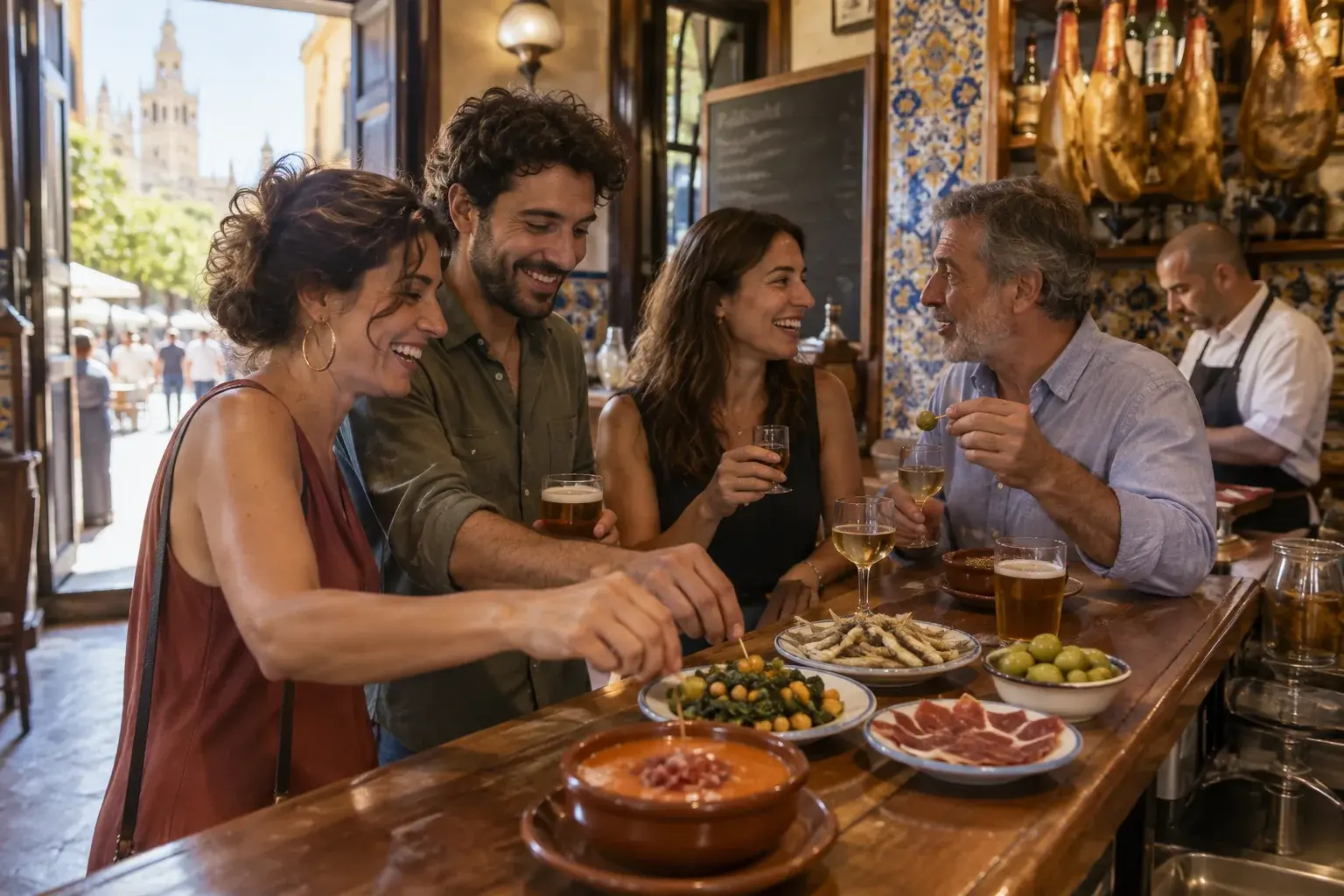
Tapas in Seville are not a small dinner: they are a way of being out on the street, sharing and moving from bar to bar. This guide explains what to order and how.
In Seville people eat tapas: small plates ordered at the bar or the table and shared, often moving from one bar to the next. Try salmorejo, spinach with chickpeas, carrillada (braised pork cheek), fried fish, the montadito de pringá and Seville olives. Lunch is late, around half past two, and dinner starts at nine.
A tapa is more than a small plate
Many stories circulate about where tapas came from, most involving a slice of ham or a saucer covering a glass of wine. It hardly matters which is true. What matters in Seville is the ritual: going out «de tapas» with friends without a fixed plan, ordering standing at the bar, sharing three or four dishes and moving on because each bar is known for something.
Tapas also set the rhythm of the day: a beer before lunch, a few plates on a terrace in the late afternoon, one more round before heading home. That is why old-school bars, with their stews and wooden counters, sit alongside modern places that reinterpret traditional recipes in small format.
Besides the tapa there is the media ración (half portion) and the ración, larger and meant for sharing at the table. If there are several of you, ordering half portions lets you try more without filling up in the first bar.
What to try in Seville
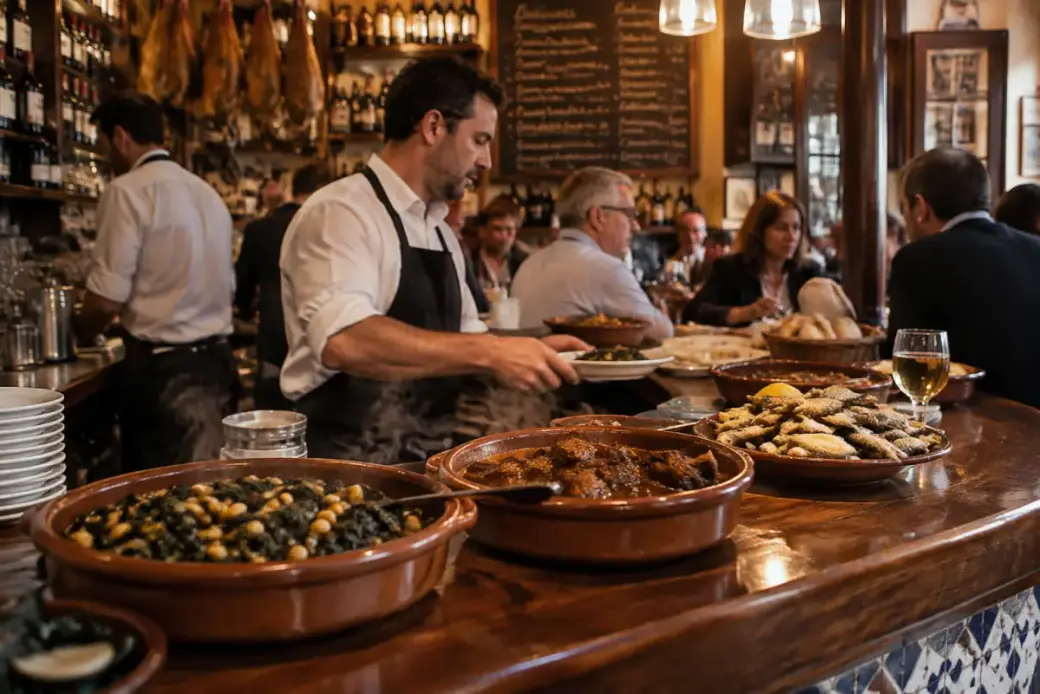
A selection of dishes that explain the city’s cooking. Many change with the season.
| Dish | What it is | When |
|---|---|---|
| Salmorejo | A cold cream of tomato, bread, olive oil and garlic, topped with egg and ham. | All year, especially in the heat |
| Gazpacho | A cold tomato and vegetable soup, often served in a glass. | Summer |
| Spinach with chickpeas | A traditional stew with cumin, paprika and fried bread. | Autumn and winter |
| Carrillada | Pork cheek slowly braised until it falls apart. | All year |
| Fried fish and cazón en adobo | Flour-dusted fried fish; the dogfish is marinated first in vinegar and cumin. | All year |
| Montadito de pringá | A small roll filled with the shredded meats from the stew pot. | All year |
| Huevos a la flamenca | Eggs baked over a tomato base with peas and cured sausage. | All year |
| Caracoles | Small snails in an herb broth, served in a bowl. | Spring and early summer |
| Torrijas | Bread soaked in milk or wine, fried and coated in honey or sugar. | Lent and Holy Week |
Produce that explains Sevillian cooking
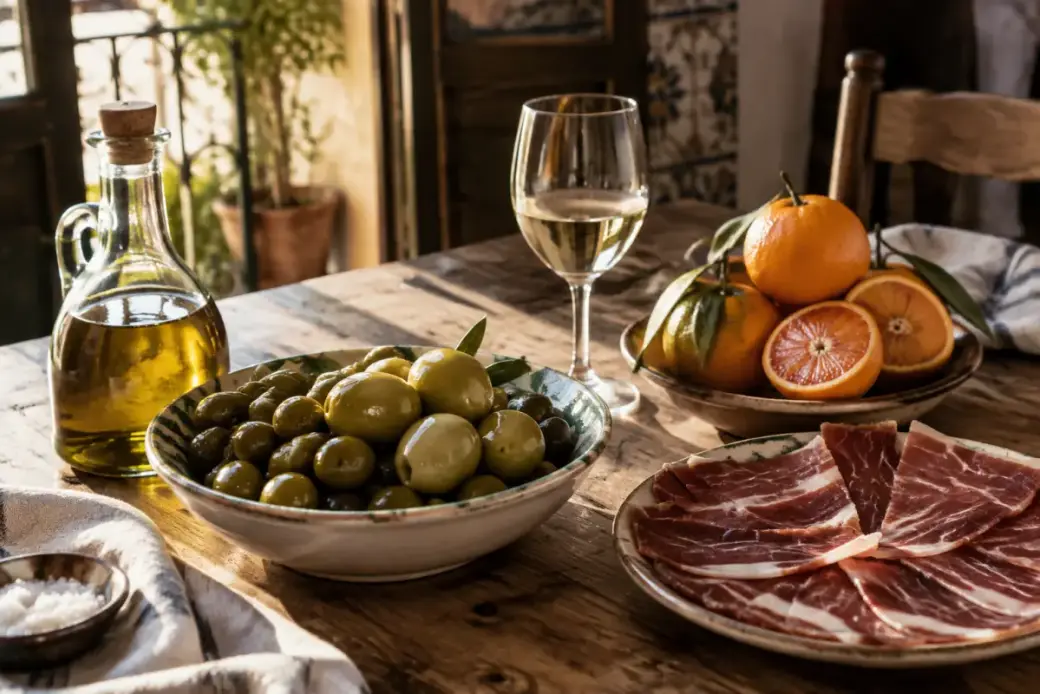
The foundation is olive oil, present in everything from the breakfast toast to fried food. Olives are almost a badge of identity: manzanilla and gordal are local varieties and a plate is rarely missing from the bar. Fish comes from the Huelva and Cádiz coasts, and from the mountains comes Iberian ham, whose landscape you can discover on the Aracena day trip.
To drink, besides ice-cold beer, there are the wines of lower Andalusia: manzanilla from Sanlúcar and fino from Jerez, dry and perfect with fried fish. In the hot months people drink tinto de verano, and in autumn the young mosto wine of the Aljarafe. To finish, there are convent sweets, still sold by some enclosed communities through a revolving hatch.
How to eat tapas like a local
- 1Order at the barIn many traditional bars you eat standing, and the waiter keeps the bill in his head or chalked on the wood.
- 2Ask what is off the menuThe day’s stews and whatever came in from the market are often on a blackboard or simply recited.
- 3Share and move onTwo or three tapas per bar and on to the next: each place has its speciality.
- 4Pay at the endYou ask for the bill when you finish, not with each round.
Eating times and customs
- Late lunchLunch is between two and four; many kitchens close mid-afternoon.
- Late dinnerDinner starts at nine. Before half past eight fewer kitchens are open.
- TippingIt is not compulsory. If the service was good, people round up or leave a few coins.
- BreadSome places charge for it separately: that is normal.
- AugustSome bars close for holidays in high summer.
Where to eat tapas: a guide by area
| Area | What you will find |
|---|---|
| Santa Cruz and the Cathedral | Plenty of places aimed at visitors; there are traditional bars, but choose carefully. |
| Triana | Neighbourhood bars, fried fish and the atmosphere of the market and Calle San Jacinto. |
| Arenal | Classic bars near the Maestranza and the river. |
| Alfalfa and Encarnación | A young crowd and a mix of tradition and modern cooking. |
| Alameda and Calle Feria | Alternative bars and the Feria market, on the way to La Macarena. |
Tradition and today’s cooking
Seville does not live on old recipes alone. A generation of chefs reinterprets stews, fish and local vegetables with modern techniques, and some of the city’s restaurants are recognised by the Michelin Guide. As those distinctions change every year, check the current edition before booking.
If you need to decide where to sit down, read our guide to where to eat in Seville; if you are after a long breakfast, see brunch and coffee.
María’s guided route
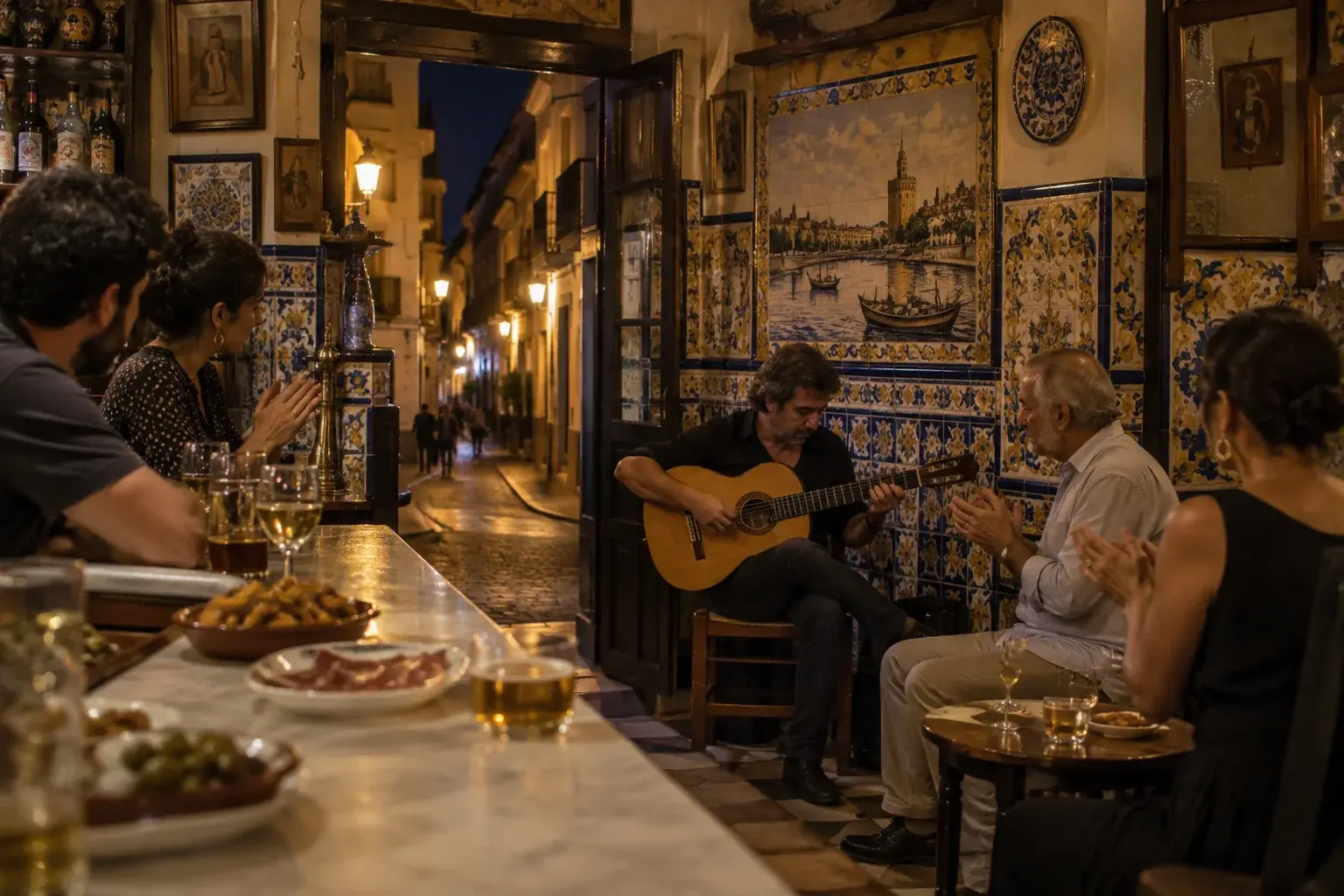
Flamenco and tapas in Triana
An evening in Triana eating tapas in neighbourhood bars while María tells the story of flamenco and ceramics, ending with intimate flamenco.
See the routeFrequently asked questions
What is the most typical tapa in Seville?
There is no single one. The most representative are salmorejo, spinach with chickpeas, carrillada, fried fish and the montadito de pringá.
What time do people eat tapas in Seville?
At midday, between one and four, and in the evening from half past eight or nine. In the afternoon many bars mainly serve drinks and a few nibbles.
Do tapas come free with a drink?
In Seville, generally not: tapas are ordered and paid for. Free tapas with a drink are more typical of other Andalusian cities such as Granada.
What do people drink with tapas?
Ice-cold beer, fino or manzanilla, tinto de verano in the hot months and, in autumn, mosto from the Aljarafe.
Are there vegetarian options?
Yes: salmorejo without ham, spinach with chickpeas, fried aubergine or tortilla. Always ask, as some stews use meat stock.
You may also like
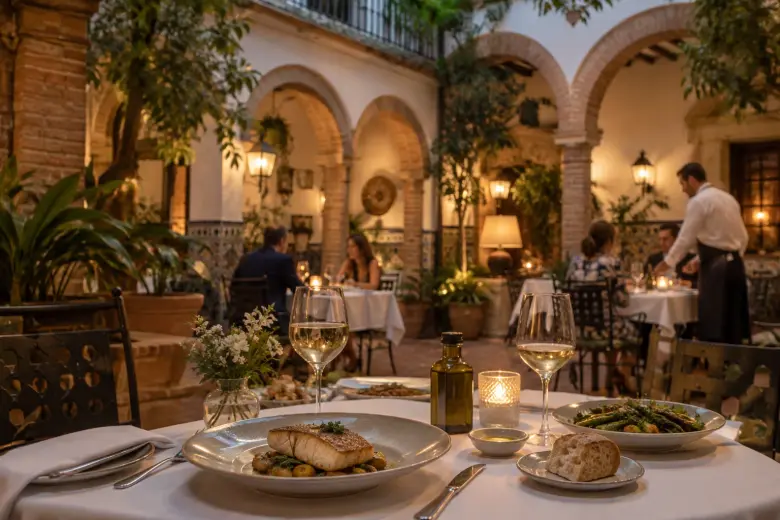 Eat SevilleWhere to eat in SevilleHow to choose a restaurant in Seville by cuisine, area, budget and occasion.Read the guide
 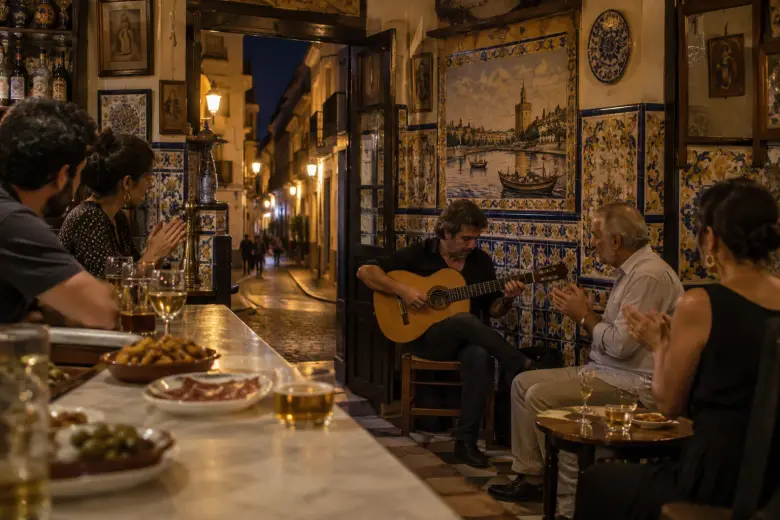 Private tour · Triana at duskFlamenco and tapas in TrianaFlamenco history, ceramics and tapas in Triana, ending with intimate flamenco.See the tour
 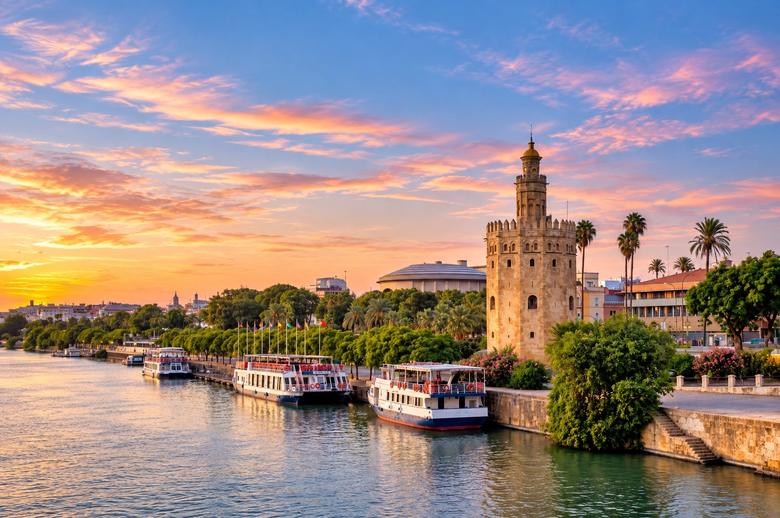 Neighbourhoods · TrianaTrianaCeramics, the river and a distinct identity across the bridge.Read the guide
 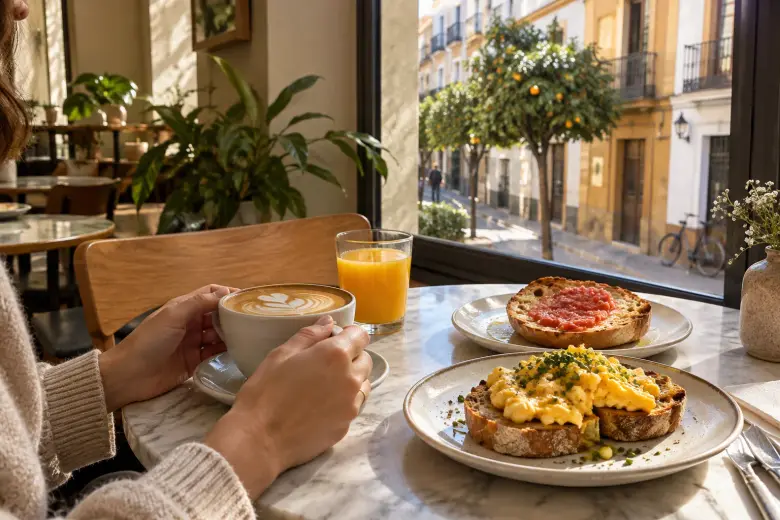 Eat SevilleBrunch and coffee in SevilleThe Sevillian breakfast, brunch and specialty coffee, by area.Read the guide
Shall we talk about your visit?
Tell María when you are coming, how many of you there are and what interests you. She will reply with a clear proposal.
Ask María about a tour