
Monuments · Plaza de España
Plaza de España, Seville: history, details and visiting
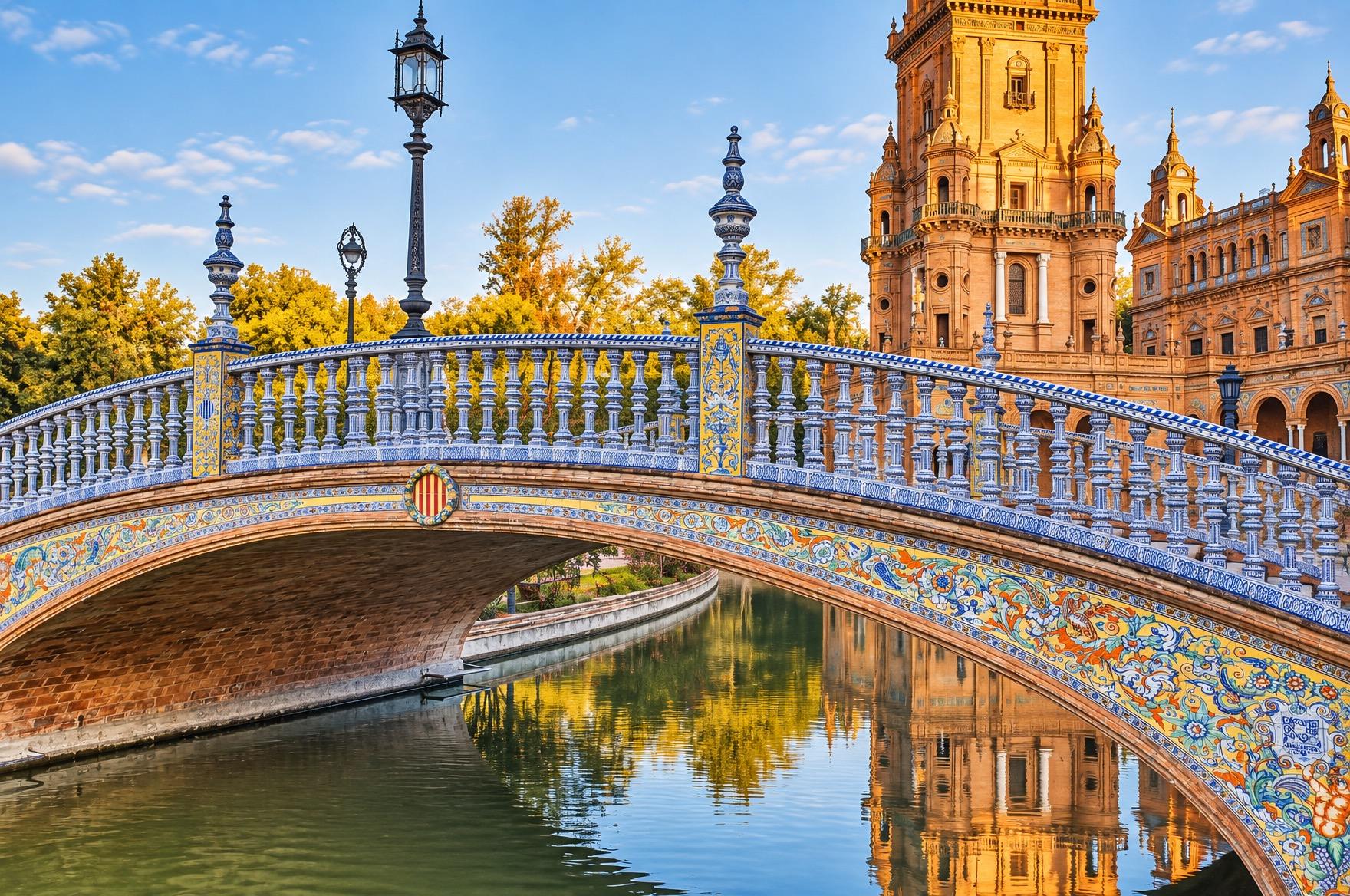
Brick, ceramics and a great semicircle opening onto the park: the building with which Seville chose to present itself to the world in 1929.
Plaza de España is the showpiece of the 1929 Ibero-American Exposition, designed by Aníbal González. It is a free public space next to María Luisa Park. Allow at least 45 minutes, ideally early in the morning or at sunset.
A film-set square
Its scale and architecture have drawn directors from around the world. Plaza de España appears in «Lawrence of Arabia», standing in for British headquarters in Cairo, and in «Star Wars: Episode II», as a palace on the planet Naboo.
Next door, María Luisa Park completes the visit: small squares dedicated to writers, ponds, Plaza de América and the Exposition pavilions, now museums. If you have time, it deserves an aimless stroll.
Why it matters
Plaza de España is the masterpiece of architectural regionalism, a style that in the early 20th century looked to the Mudéjar, Renaissance and Baroque past for an identity of Seville’s own. Exposed brick, glazed ceramics and wrought iron: the city’s traditional materials put to work in a modern project.
It is also a document of its time. The Ibero-American Exposition set out to strengthen ties with the countries of the Americas, and the square translates that ambition into brick and tile. Looking at it with this in mind turns a photogenic setting into a history lesson.
What is worth looking at
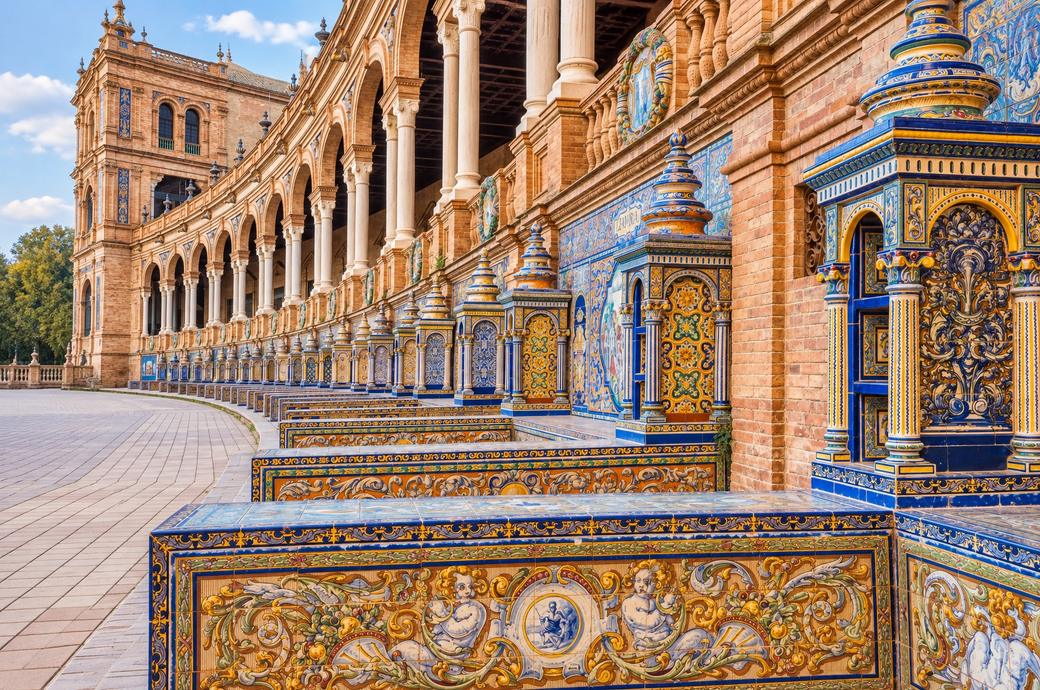
The provincial benches
Along the building, each Spanish province has a tiled bench with a map and a historical scene. Together they form a catalogue of Seville ceramics of the period.
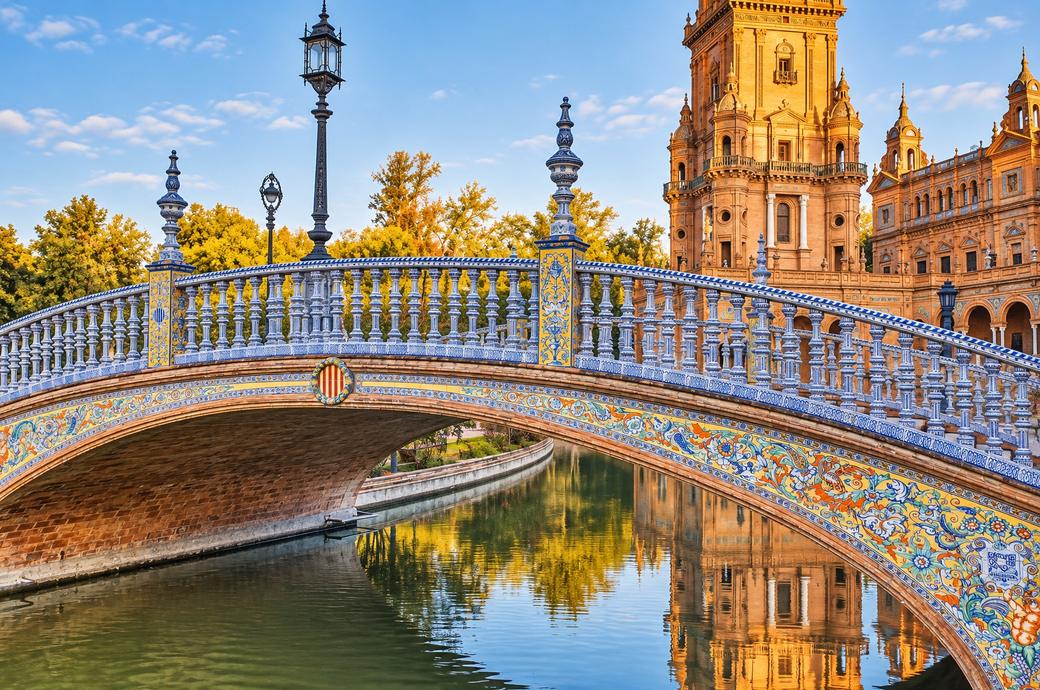
The four bridges
They cross the canal and represent the old kingdoms of Castile, León, Aragon and Navarre. Their ceramic balustrades are among the most photographed details.
The semicircular shape
The building opens like an embrace towards the river, a symbolic gesture to the American countries invited to the Exposition.
The towers and arcade
Two towers frame the complex and an arcade runs the length of the semicircle: perfect shelter from the sun.
Essential history in five milestones
| Date | Milestone |
|---|---|
| 1893 | Infanta María Luisa Fernanda donates part of the San Telmo palace gardens to the city. |
| 1911–1914 | The Exposition is planned and work on the square begins under Aníbal González. |
| 1929 | The Ibero-American Exposition opens. |
| 20th century | The building comes to house government offices. |
| Today | One of the city’s most visited public spaces and a frequent film location. |
How to plan your visit
- How long45 minutes to an hour; longer if you also stroll through María Luisa Park.
- Best timeEarly morning is quieter; at sunset the light on the brick is spectacular. At midday in summer there is very little shade.
- AdmissionNone needed: it is a public space.
- AccessibilityThe square is wide and flat; the bridges have slopes and a few steps.
What to see nearby
María Luisa Park, with its small squares and Plaza de América, is right next door. Following the river north you reach the Torre del Oro and, across the bridge, Triana.
Want to see Plaza de España with fresh eyes?
The Triana and Plaza de España tour links the square with the river and Triana’s ceramics.
Frequently asked questions
Do you have to pay to enter Plaza de España?
No, it is a free public space.
Who built Plaza de España?
The Sevillian architect Aníbal González, for the 1929 Ibero-American Exposition.
What do the benches represent?
Each bench is dedicated to a Spanish province, with its map and a tiled scene from its history.
What is the best time for photos?
Early morning or at sunset.
You may also like
 Private tour · River and neighbourhoodTriana and Plaza de EspañaThe river as a thread: Triana’s identity and the Seville of 1929.See the tour
 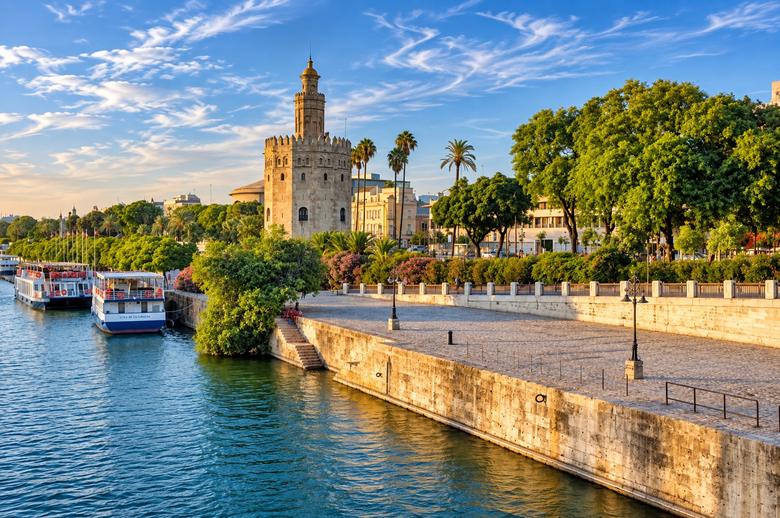 Monuments · Torre del OroTorre del OroRiver, defence and the myth of American gold.Read the guide
 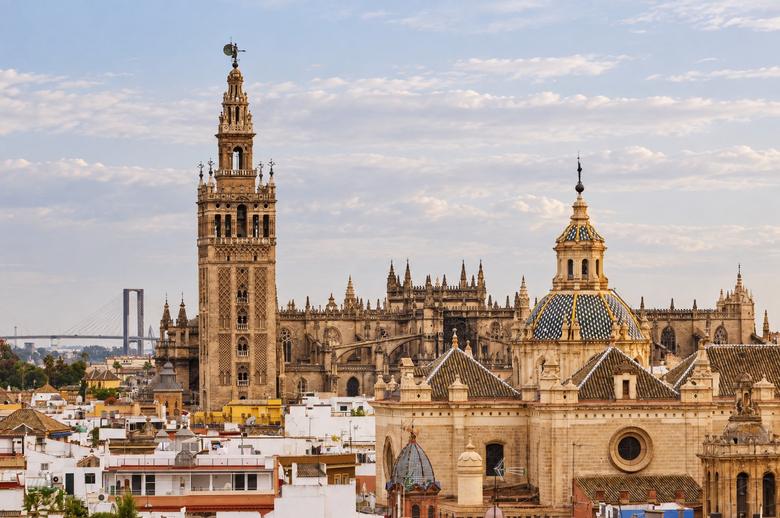 Guide · 1-day itineraryWhat to see in Seville in 1 dayThe essential itinerary, with a map and alternatives.Read the guide
 - Private tours · FamiliesFamiliesA flexible pace, breaks and stories for children and adults.View page
Shall we talk about your visit?
Tell María when you are coming, how many of you there are and what interests you. She will reply with a clear proposal.
Ask about this tour