
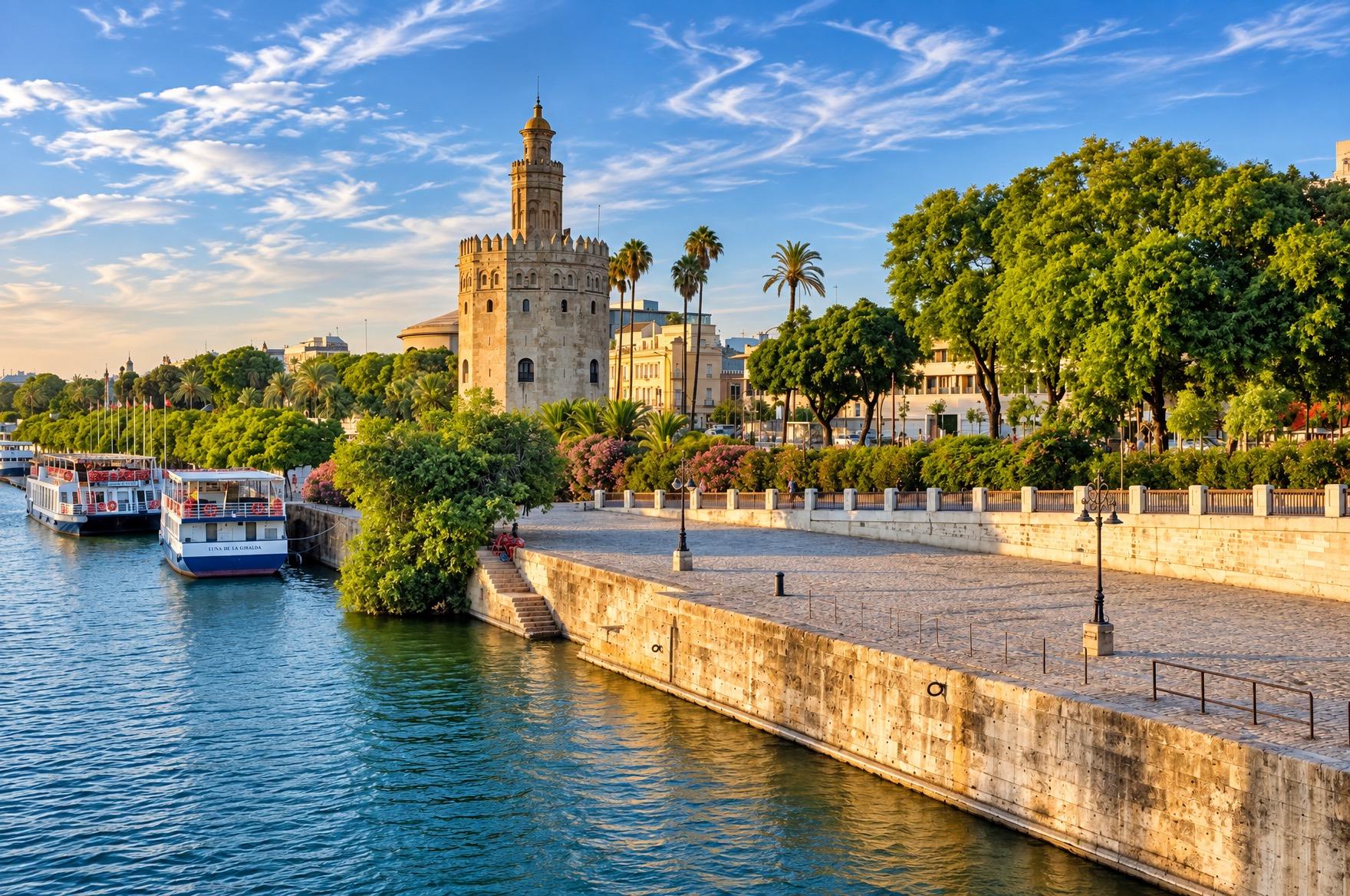
Monuments · Torre del Oro
Torre del Oro: history and a visit by the Guadalquivir
An Almohad defence tower that became the symbol of the port of the Indies, and whose name has inspired more myths than certainties.
The Torre del Oro is a 13th-century Almohad defence tower built by the Guadalquivir to control access to the port. Today it houses a small Naval Museum. You can see the outside in minutes; a visit inside takes 30–45 minutes.
How to read the tower
The tower has three stacked sections, each from a different era. The lowest, twelve-sided, is the original Almohad work. The second, also twelve-sided and narrower, was added in the 14th century. The third, cylindrical and topped with a dome, dates from the 18th century.
Seen from the Triana bank, the sequence is clear, and you realise it is not a building made in one go but a sum of repairs and additions.
Why it matters
The Torre del Oro is the most visible reminder of walled Seville and of the river’s importance in its history. For centuries the Guadalquivir was the city’s real gateway: conquerors and merchants arrived along it, and the fleets for the Americas departed from it.
The tower sums up that history in a single image. It was born as an Almohad defence, witnessed the Castilian conquest, presided over the port of the Indies and now keeps the city’s maritime memory. Few buildings in Seville have changed role so often without losing their meaning.
Its twelve-sided shape and isolated position by the water also make it the best landmark for finding your way along the riverside.
Myth and history
It is tempting to think it was named for storing American gold. There is no evidence for that. The most widely accepted explanation is much simpler: the golden reflection of its materials on the river.
Its military role, however, is history. It was part of the city wall and, according to the chronicles, a chain ran from it across the river to Triana to block ships. During the siege of 1248, the Castilian fleet managed to break the river defences, a key moment in the conquest of the city.
Essential history in five milestones
| Date | Milestone |
|---|---|
| 1220–1221 | The Almohads build the tower, joined to the city wall. |
| 1248 | The Castilian fleet breaks the river defences during the siege of Seville. |
| 16th–17th centuries | The tower presides over the port of the Indies, opposite El Arenal. |
| 18th century | After damage in the 1755 earthquake, the top section is added. |
| 1944 | The Naval Museum opens inside. |
How to plan your visit
- How long30 to 45 minutes for the museum and terrace.
- Best timeAt sunset, as the sun sinks over Triana and the tower is reflected in the river.
- AdmissionNaval Museum opening times and conditions on the Naval Museum Foundation website.
- AccessibilityThe upper floors are reached by stairs.
What to see nearby
You are in the heart of El Arenal: the Maestranza bullring and the Hospital de la Caridad are a few steps away. Following the river south you reach Plaza de España; across the bridge, Triana.
Shall we explore the river with a guide?
The Seville in two days tour devotes a day to the river, El Arenal and Triana.
Frequently asked questions
Why is it called the Tower of Gold?
The most accepted explanation is the golden sheen of its materials reflected in the river. There is no evidence that it stored American gold.
Can you go up the Torre del Oro?
Yes, the Naval Museum gives access to the interior and a terrace. Check opening times on its website.
When was it built?
In 1220–1221, during the Almohad period.
What is inside?
A small naval museum with models, instruments and documents on Seville’s maritime history.
You may also like
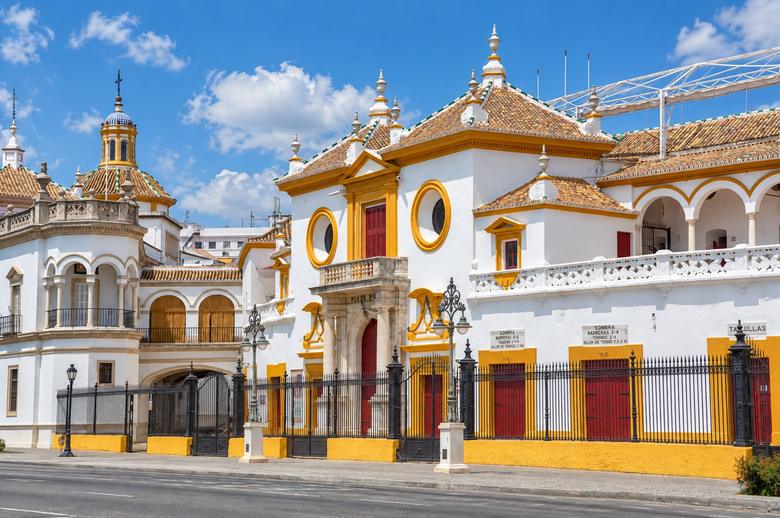 Neighbourhoods · El ArenalEl ArenalThe old port of the Indies, the Maestranza and the Caridad.Read the guide
 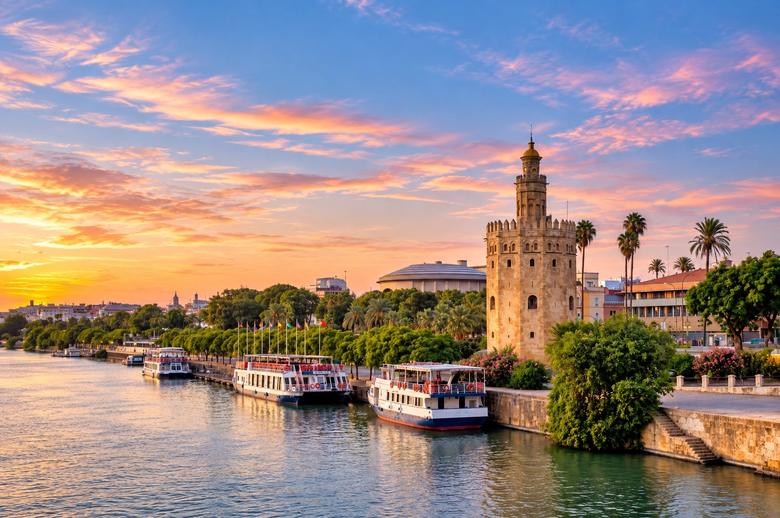 Neighbourhoods · TrianaTrianaCeramics, the river and a distinct identity across the bridge.Read the guide
 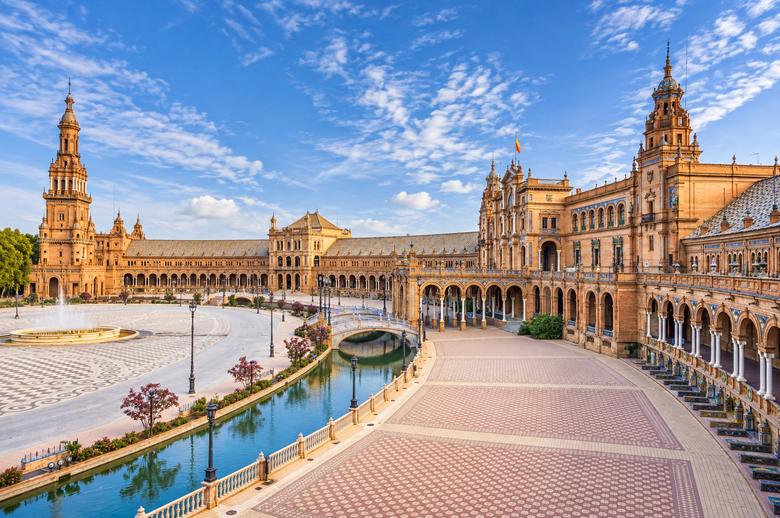 Private tour · Two daysSeville in two daysOne day for monuments, another for neighbourhoods, river and squares.See the tour
 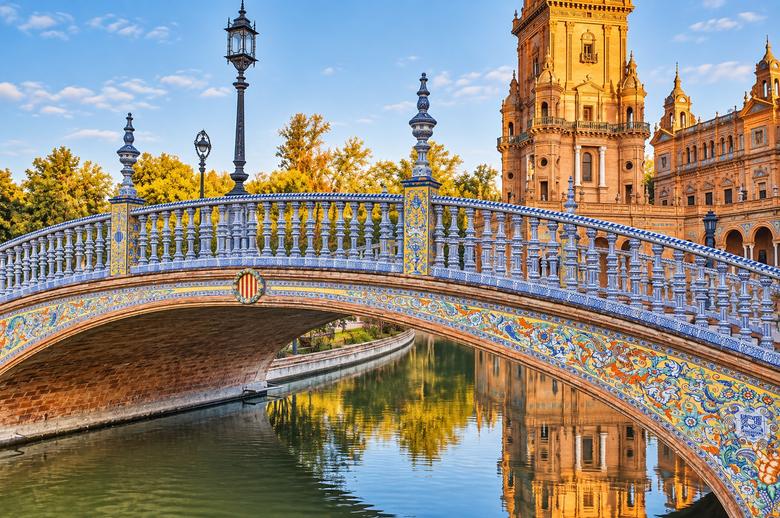 Monuments · Plaza de EspañaPlaza de EspañaCeramics, symbolism and the Seville of 1929.Read the guide
Shall we talk about your visit?
Tell María when you are coming, how many of you there are and what interests you. She will reply with a clear proposal.
Ask about this tour