
Live Seville
Squares of Seville: where the city sits down to live
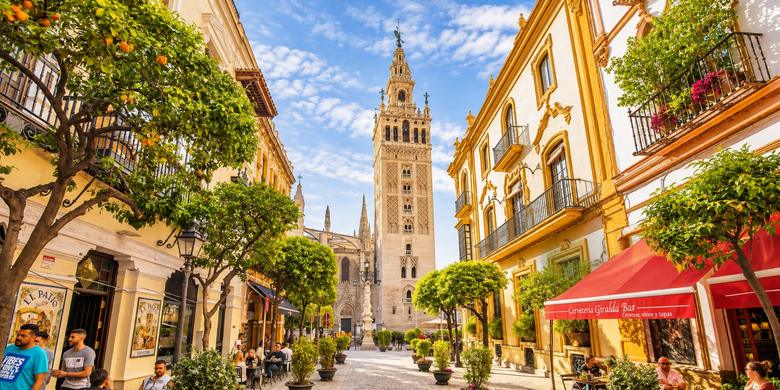
In Seville life happens in the squares: under the orange trees, on terraces, after Mass or on the way to work. These are the ones that tell the city best.
Seville’s essential squares are Plaza del Triunfo, between the Cathedral and the Alcázar; Plaza de San Francisco and Plaza Nueva, the city’s civic heart; Plaza del Salvador, the liveliest at midday; Plaza de Santa Cruz and Plaza de Doña Elvira in the old Jewish quarter; and the Alfalfa and the Alameda de Hércules for neighbourhood life.
Why the squares explain Seville
Seville’s old town inherited a medieval layout of narrow, winding streets. The squares are its breathing spaces: many grew up next to a parish church, because after the Christian conquest the city was organised by parishes, while others were opened in the nineteenth century on the sites of demolished convents, such as Plaza Nueva or Plaza de la Encarnación.
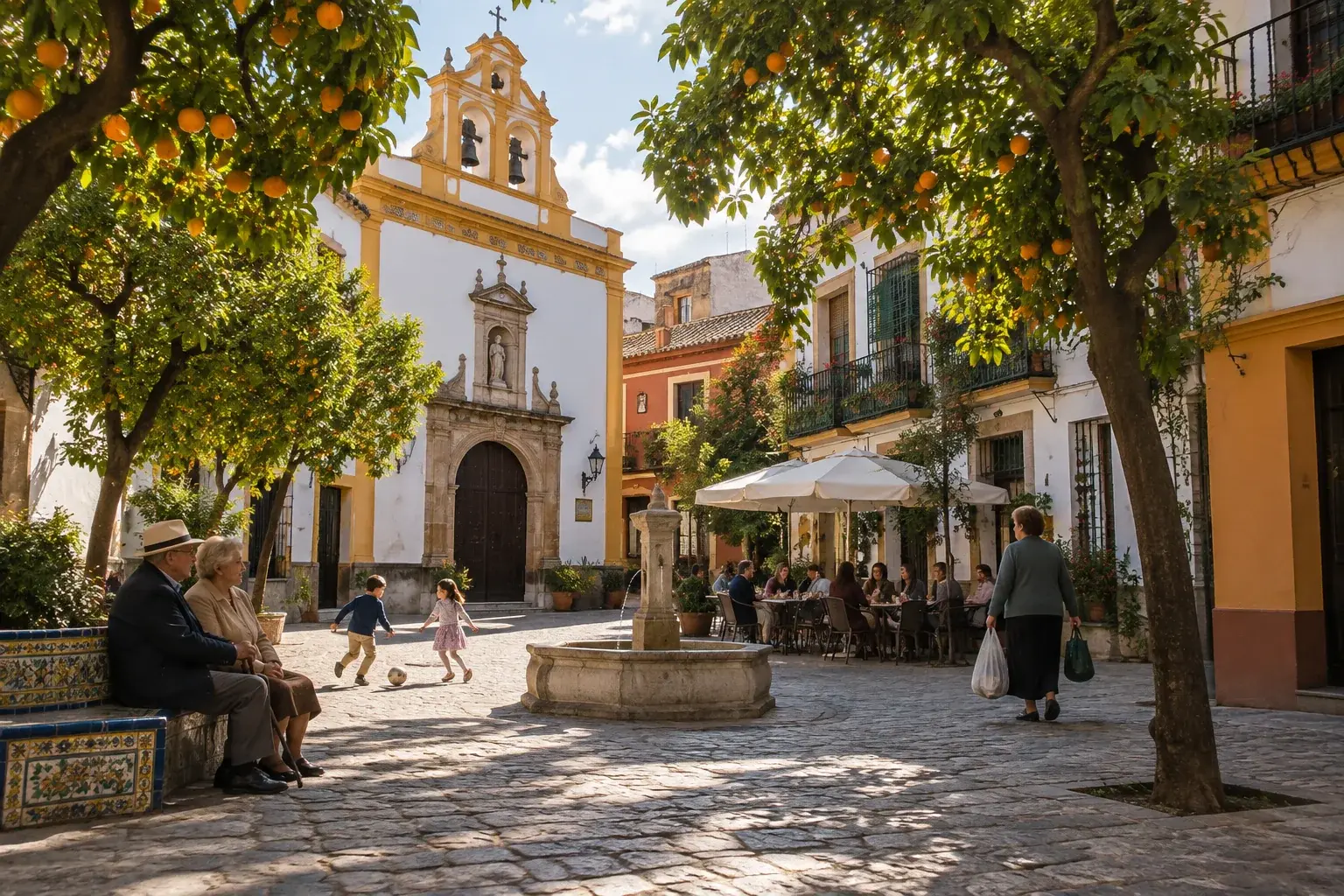
That is why each square has its own character. Some are monumental and ceremonial; others tiny and secluded; a few are the living room of an entire neighbourhood. Almost all share orange trees for shade, benches, a fountain and a life that changes with the time of day.
Squares you should not miss
Plaza del Triunfo
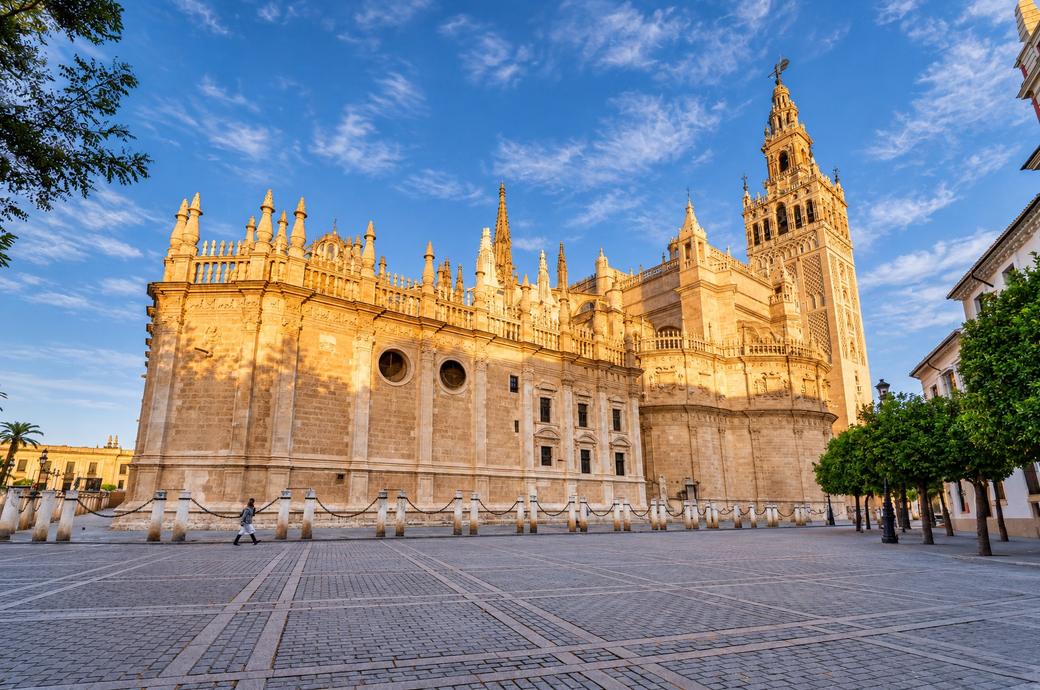
Surrounded by the Cathedral, the Real Alcázar and the Archive of the Indies, it is the city’s most monumental square. Its column commemorates Seville’s survival of the 1755 Lisbon earthquake.
San Francisco and Plaza Nueva
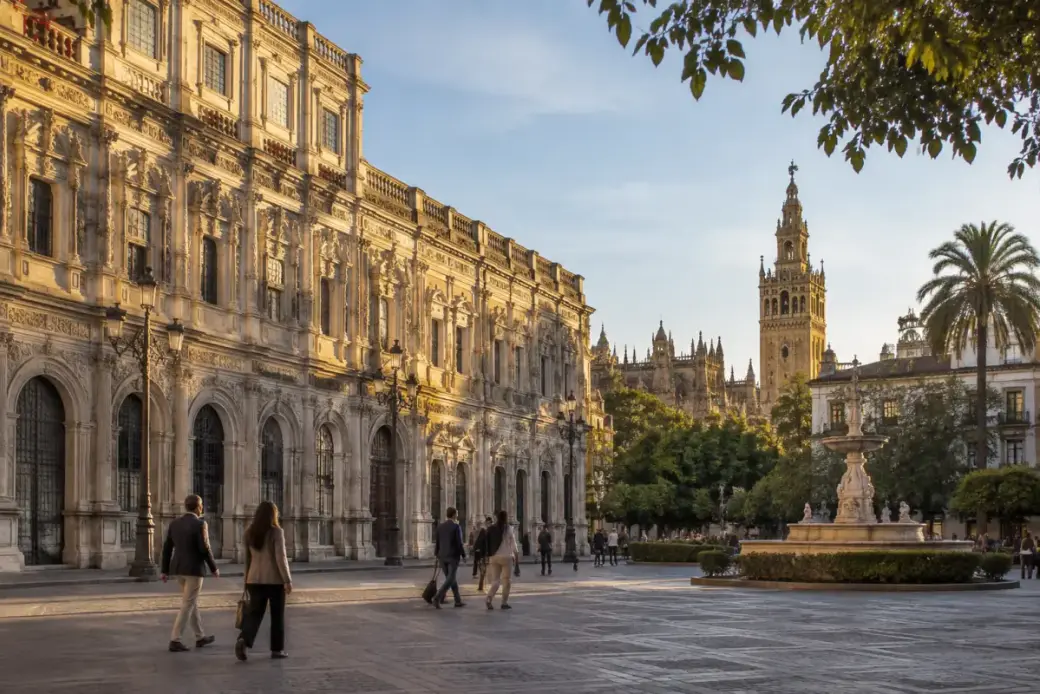
The City Hall separates them: towards San Francisco it shows its sixteenth-century Plateresque façade, and towards Plaza Nueva, opened on the site of a former convent, its nineteenth-century front with the equestrian statue of Fernando III. The Holy Week processions pass through San Francisco.
Plaza del Salvador
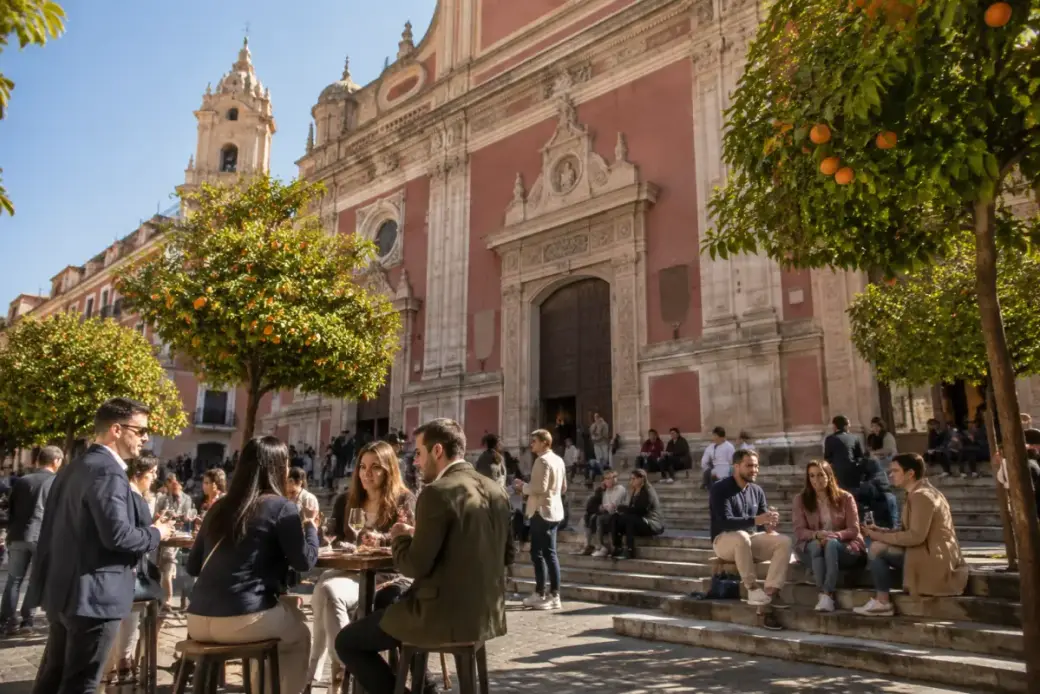
Presided over by the church of El Salvador, built on the site of the city’s first great mosque. At midday its steps and bars fill with people having a drink: one of the most Sevillian of rituals.
Santa Cruz and Doña Elvira
In the old Jewish quarter. Plaza de Santa Cruz, with its wrought-iron cross, stands where the church in which Murillo was buried once stood. Doña Elvira, small and shaded, is a corner of orange trees, tiles and benches. Discover them in our Santa Cruz guide.
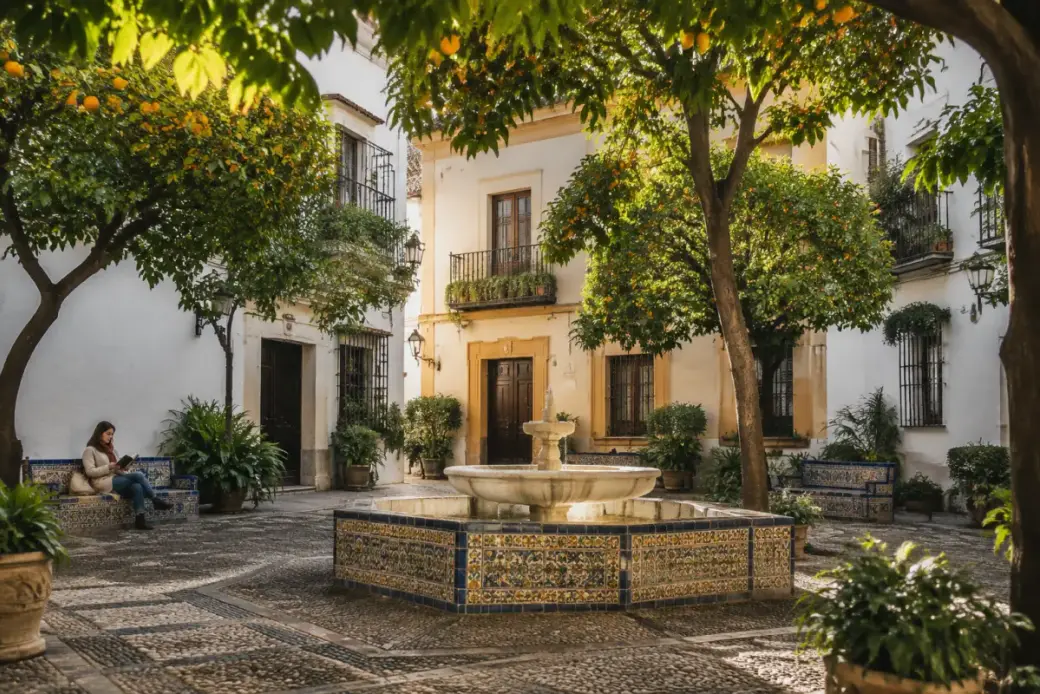
La Alfalfa
A former market space in the heart of the centre, today it is a crossroads of terraces and a young crowd, a step from El Salvador and the shopping streets.
Alameda de Hércules
More promenade than square, laid out in 1574, it is the great living room of the northern centre. We cover it in our guide to alternative Seville.
Plaza del Cabildo
Tucked away off Avenida de la Constitución, this semicircular arcaded square goes unnoticed by many visitors. On Sunday mornings it hosts a collectors’ market.
Which square for each time of day
| Time | Square | Why |
|---|---|---|
| Early morning | Santa Cruz and Doña Elvira | Silence and soft light before the groups arrive. |
| Midday | El Salvador | The quintessential Sevillian aperitif. |
| Afternoon | Alfalfa and Alameda | Terraces, strolling and neighbourhood life. |
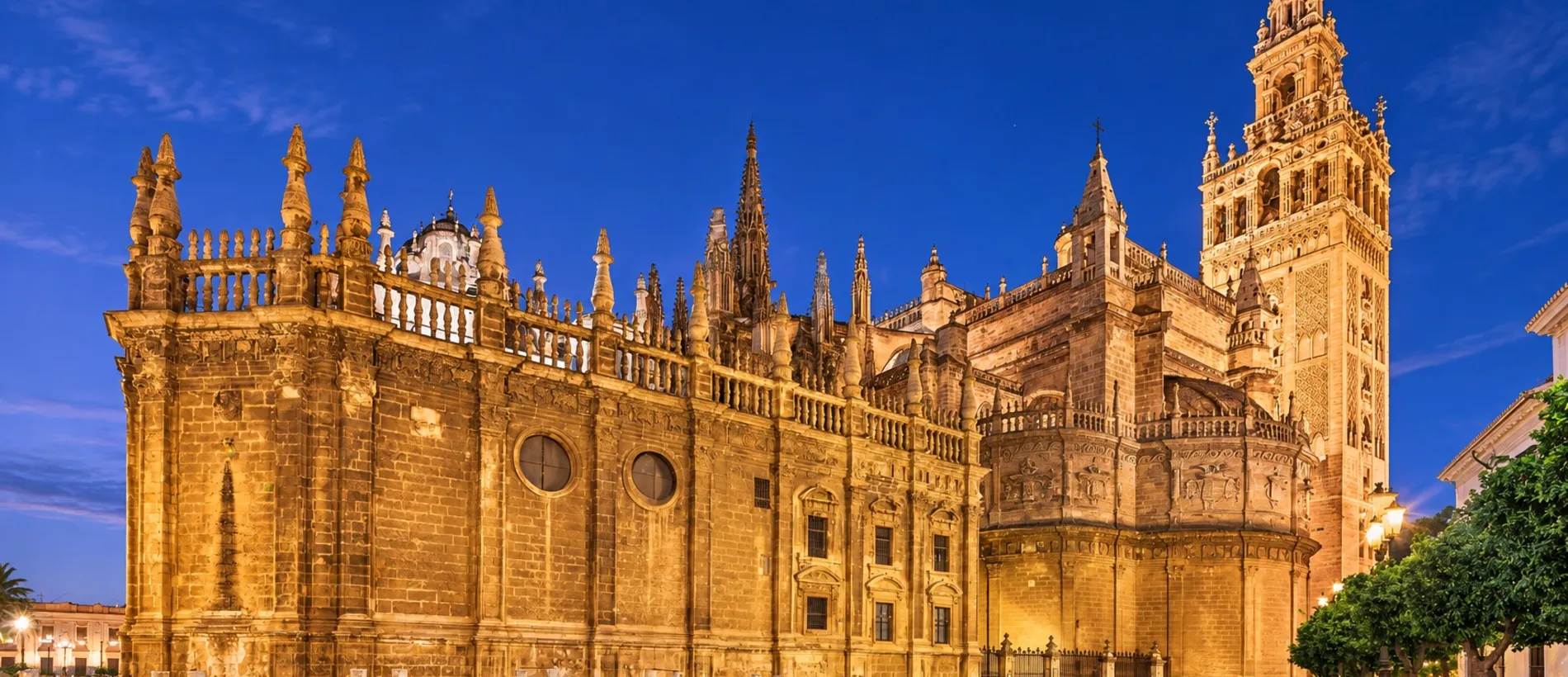
| Night | Triunfo and Virgen de los Reyes | The Cathedral and the Giralda lit up. |
What to notice in a Sevillian square
- The orange treesThey give shade all year round and in spring the scent of orange blossom fills the squares.
- The ceramicsBenches, fountains, street signs and tiled altarpieces on the façades.
- The churchMany squares take their name from the parish that presides over them.
- The lifeWho uses it and when: residents, children, terraces, brotherhoods. A square is understood by watching the people.
A walk from square to square
In a couple of hours you can link many of these squares: from the Triunfo to Virgen de los Reyes, then Santa Cruz and Doña Elvira, and on to El Salvador, San Francisco, Plaza Nueva and the Alfalfa. If you would rather have someone tell you what they hide, the guided tour of the Santa Cruz quarter explores its corners slowly.
Outside the historic centre, Plaza de España is another scale altogether: a 1929 creation designed as a grand stage. And to link squares, river and parks in one morning, the Seville by bike route makes it easy.
Keep reading
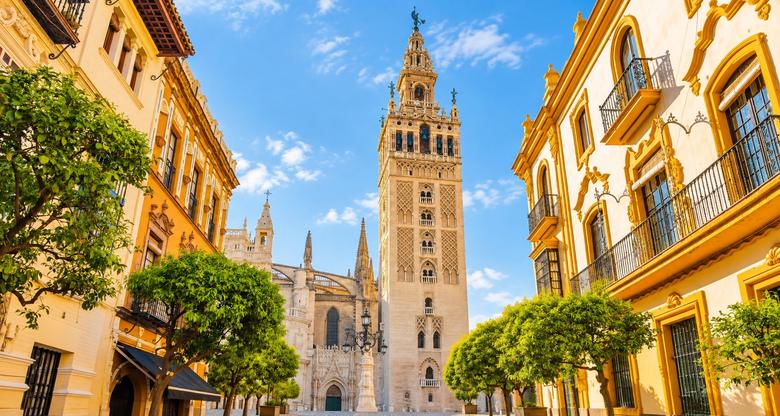 Seville guide · NeighbourhoodsNeighbourhoodsSanta Cruz, Triana, El Arenal and La Macarena, each at its own pace.Read the guide
 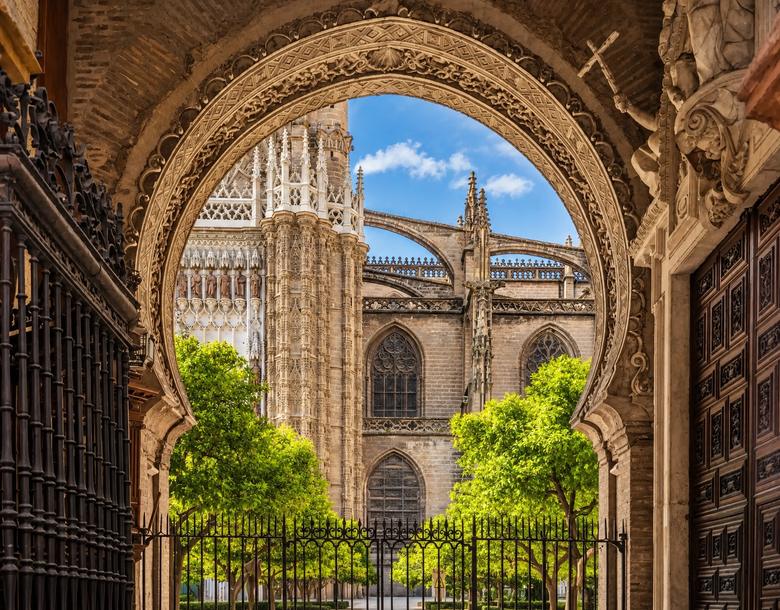 Seville guide · MonumentsMonumentsWhat each monument is, how long it takes and how to combine it.Read the guide
 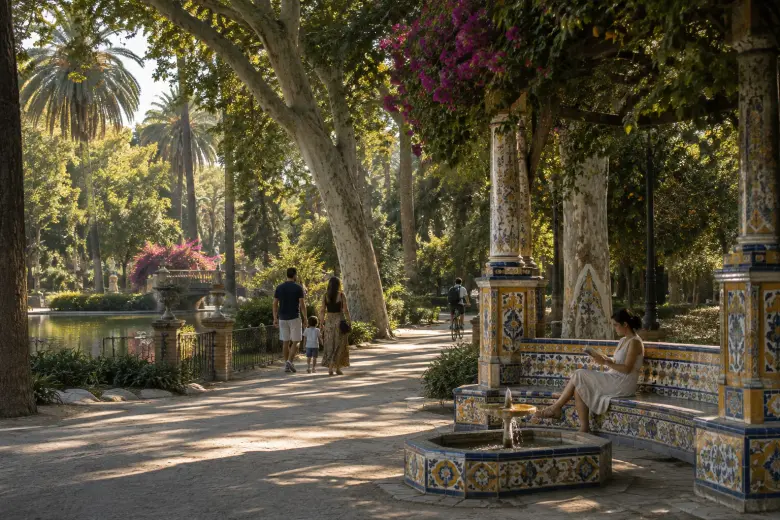 Live SevilleParks and gardens of SevilleMaría Luisa, the Alcázar gardens, Murillo, the Alamillo and the riverside.Read the guide
Frequently asked questions
What is the most beautiful square in Seville?
The most famous is Plaza de España, but to experience the city, Plaza de Santa Cruz, Doña Elvira, El Salvador and the Triunfo stand out.
Which square has the best atmosphere?
El Salvador at midday, and the Alfalfa and the Alameda in the afternoon and evening.
What is Plaza del Triunfo?
The square between the Cathedral, the Alcázar and the Archive of the Indies. Its monument commemorates the city’s survival of the 1755 Lisbon earthquake.
Can I visit the squares on one walk?
Yes. The central squares are very close to one another and the main ones can be linked on foot in a couple of hours.
You may also like
- Seville guide · NeighbourhoodsNeighbourhoodsSanta Cruz, Triana, El Arenal and La Macarena, each at its own pace.Read the guide
- Seville guide · MonumentsMonumentsWhat each monument is, how long it takes and how to combine it.Read the guide
 Neighbourhoods · Santa CruzSanta CruzA walking route through the old Jewish quarter and its squares.Read the guide
 - Live SevilleParks and gardens of SevilleMaría Luisa, the Alcázar gardens, Murillo, the Alamillo and the riverside.Read the guide
Shall we talk about your visit?
Tell María when you are coming, how many of you there are and what interests you. She will reply with a clear proposal.
Ask María about a tour