
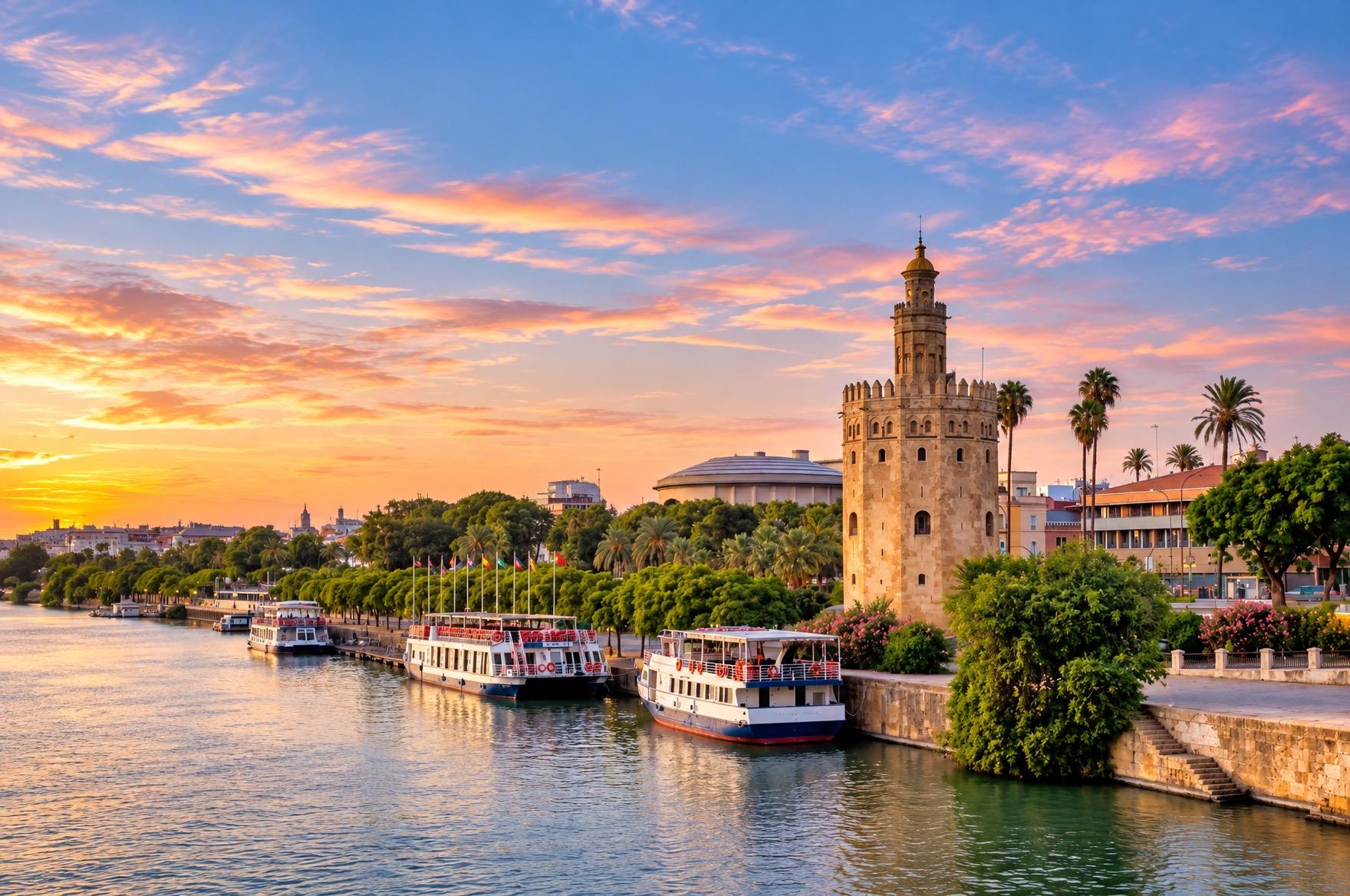
Neighbourhoods · Triana
Triana: what to see across the Guadalquivir
A neighbourhood of sailors, potters and flamenco singers. Crossing the bridge means entering a Seville with an identity all its own.
Triana is the Seville neighbourhood across the Guadalquivir. The essentials: cross Triana Bridge, visit the market and the Castle of San Jorge, walk the ceramics streets and end on Calle Betis at sunset. Allow two hours.
An identity worth defending
For many Trianeros, crossing the bridge is still «going to Seville». That phrase sums up an identity built over centuries on the other side of the river, expressed today in the brotherhoods, the tiles on the façades and a fierce neighbourhood pride.
Essential history
| Date | Milestone |
|---|---|
| 1171 | The Almohads lay the bridge of boats that will link Triana and Seville for seven centuries. |
| 1481 | The Castle of San Jorge becomes the seat of the Inquisition tribunal. |
| 1519 | The Magellan–Elcano expedition sets off from Triana’s quay. |
| 1852 | The Isabel II bridge, today’s Triana Bridge, opens. |
| 20th century | The historic potteries close or move away; ceramics become memory and museum. |
What to see nearby
Crossing back over the bridge brings you to El Arenal and the Torre del Oro. Following the riverbank south, a riverside walk leads to Plaza de España.
What defines the neighbourhood
For centuries Triana was a suburb outside the walls, linked to Seville by a bridge of boats. It lived off the river: sailors, caulkers, fishermen. Its clay produced the bricks, roof tiles and glazed tiles of half of Andalusia, and its potteries made Triana ceramics famous.
That physical distance created an identity that Trianeros still proudly claim. Key figures of flamenco were born or lived here, and brotherhoods, communal courtyards and workshops continue to shape the neighbourhood.
Suggested walking route
About two hours with stops.
- Triana BridgeThe Isabel II bridge, the city’s first iron bridge.
- Castle of San Jorge and marketThe memory of the Inquisition and daily life.
- Calle Alfarería and Antillano CamposWorkshops and tiled façades.
- Church of Santa AnaThe «cathedral of Triana».
- Calle BetisThe best view of Seville at sunset.
Editorial map: it shows the logic of the walk.
Five places explained
Triana Bridge
Opened in 1852, it replaced the old bridge of boats. It is the neighbourhood’s symbol and the gateway from the centre.
Castle of San Jorge
Seat of the Inquisition tribunal from the late 15th century. Its remains, beneath the market, now house an interpretation centre on intolerance.
Triana Market
Built over the castle, it is a working food market with long-standing stalls and bars for tapas.
Centro Cerámica Triana
Set in a former ceramics factory, it tells the story of the local potteries and preserves their kilns.
Church of Santa Ana
One of Seville’s oldest churches, founded after the Castilian conquest.
When to go
- MorningThe market is in full swing.
- SunsetCalle Betis and the bridge give the best views of the Torre del Oro and the Giralda.
- EveningBars and taverns come alive, especially around Betis and San Jacinto.
Mistakes and clichés
- Staying on Calle BetisThe most authentic Triana is in its inner streets.
- Reducing it to flamencoTriana is also the river, crafts, ceramics and brotherhoods.
- RushingTriana is best enjoyed walking slowly and stopping at a bar.
Want to cross the river with a guide?
The Triana and Plaza de España tour links the neighbourhood with the Seville of 1929.
Frequently asked questions
How do you get to Triana from the centre?
On foot, crossing Triana Bridge from Calle Reyes Católicos.
What to buy in Triana?
Ceramics from the local workshops, ideally bought directly from them.
How long do you need to see Triana?
About two hours for a full walk; longer if you eat there.
What is nearby?
Across the bridge is El Arenal with the Torre del Oro.
You may also like
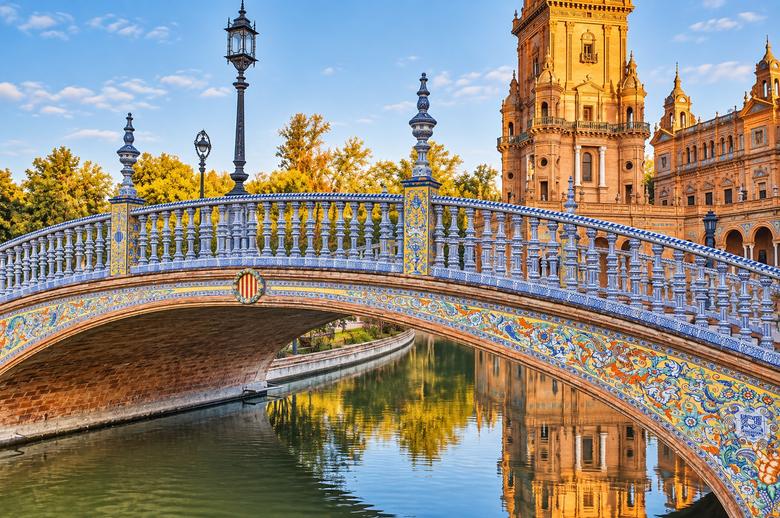 Private tour · River and neighbourhoodTriana and Plaza de EspañaThe river as a thread: Triana’s identity and the Seville of 1929.See the tour
 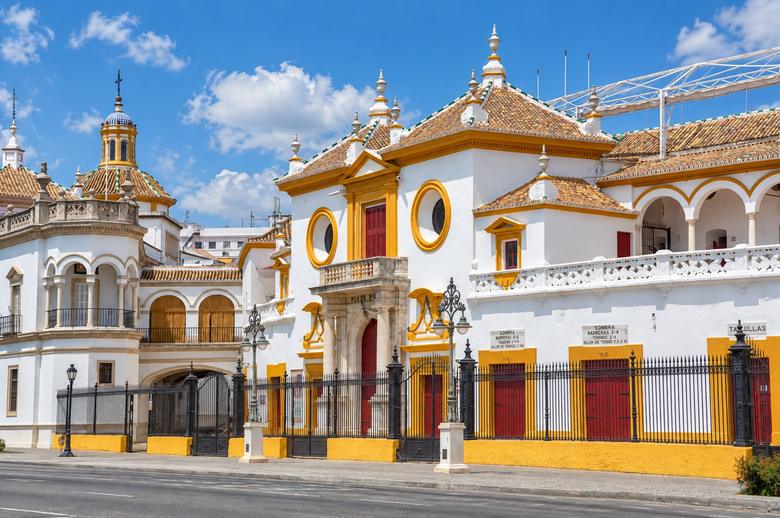 Neighbourhoods · El ArenalEl ArenalThe old port of the Indies, the Maestranza and the Caridad.Read the guide
 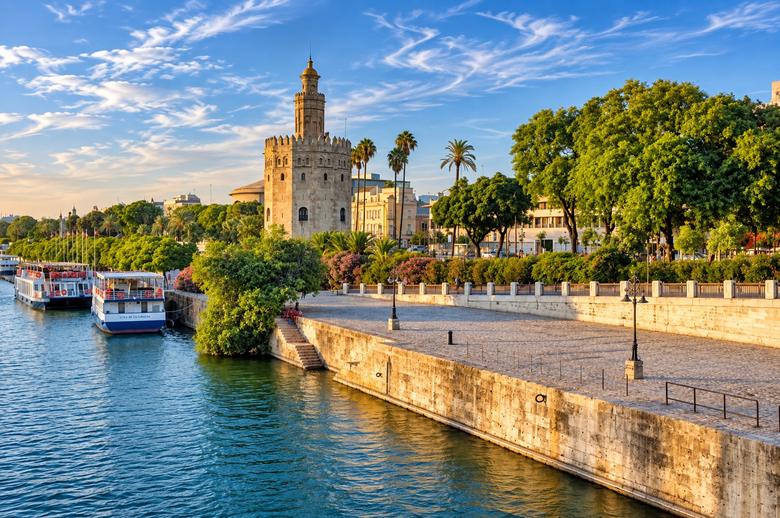 Monuments · Torre del OroTorre del OroRiver, defence and the myth of American gold.Read the guide
 - Monuments · Plaza de EspañaPlaza de EspañaCeramics, symbolism and the Seville of 1929.Read the guide
Shall we talk about your visit?
Tell María when you are coming, how many of you there are and what interests you. She will reply with a clear proposal.
Ask about this tour