Understand Seville
Music in Seville: a city you understand by listening
The lament of a soleá in Triana, an opera set in its streets, a band playing a Holy Week march or sevillanas at the April Fair. Seville has many musics and each tells something about it.
Seville is one of Spain’s great musical cities. It is a cradle of much of flamenco, with Triana as its symbol; the setting of dozens of operas such as «Carmen», «The Barber of Seville» and «Don Giovanni»; home to the Teatro de la Maestranza; the land of 1970s Andalusian rock and of sevillanas; and every Holy Week it resounds with processional marches.
Flamenco: from courtyards to the stage
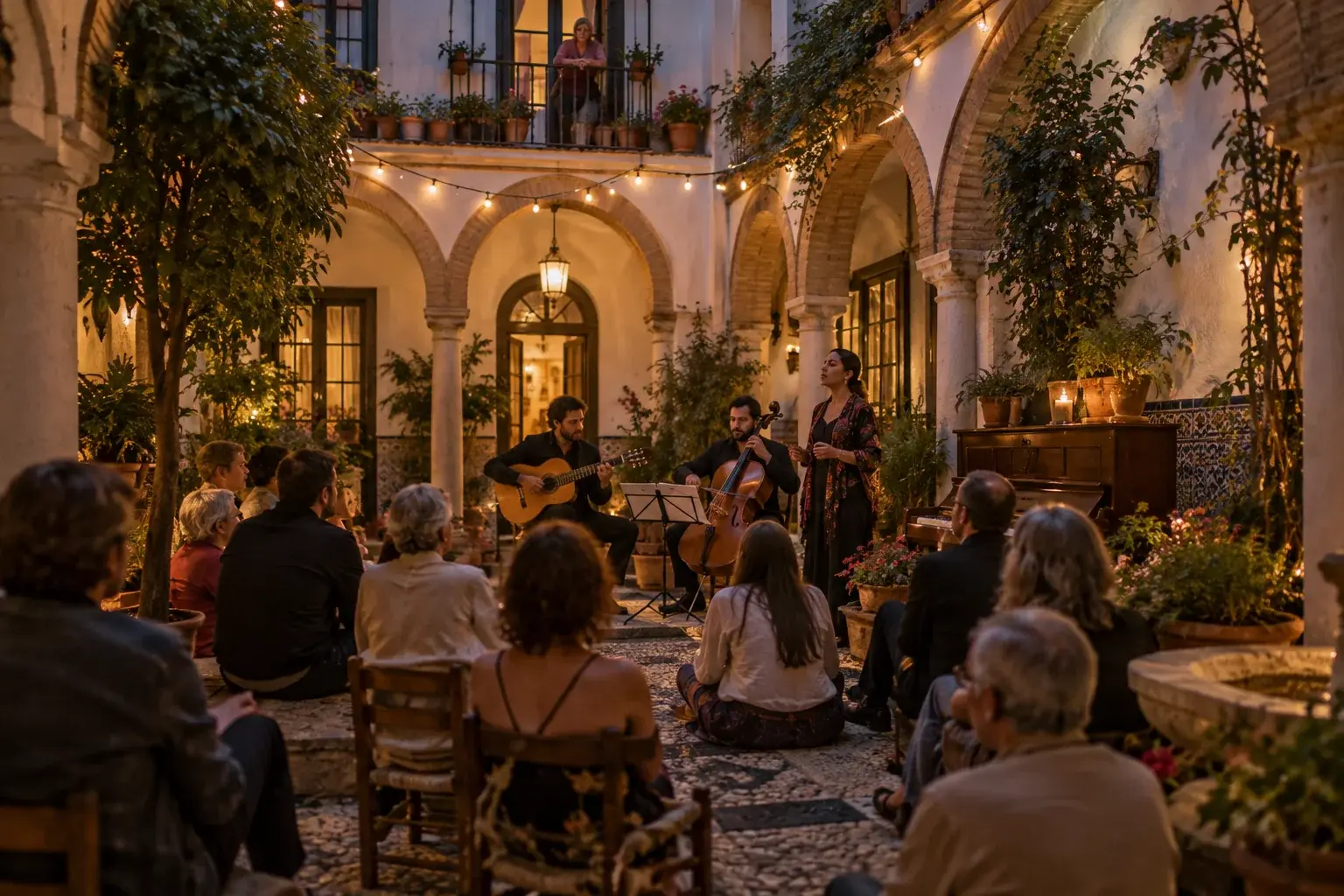
Flamenco took shape in lower Andalusia during the nineteenth century, where Roma, Andalusian and popular traditions met. Seville was one of its great centres: in neighbourhoods such as Triana and in the cafés cantantes of the centre, where singing, guitar and dance began to turn professional and find an audience.
Today flamenco is heard in peñas, tablaos, theatres and small venues, and every two years the city holds the Bienal de Flamenco, one of the genre’s most important festivals. To understand the neighbourhood where that memory is felt most, the Flamenco and tapas in Triana route explores it with María; if you simply want to see it up close, see the intimate flamenco in Triana experience.
Flamenco styles in brief
Each «palo» is a style with its own rhythm, character and origin. These are some you will often hear.
| Style | Character |
|---|---|
| Soleá | Deep and solemn; considered one of the mothers of flamenco song. Triana has its own style. |
| Seguiriya | Dramatic, a lament; among the most intense. |
| Bulerías | Festive and fast, full of rhythmic play; it ends many gatherings. |
| Alegrías | Bright, linked to Cádiz; much danced. |
| Tangos | Rhythmic and festive, in binary time. |
| Fandangos | Very varied; those from Huelva are among the best known. |
| Saeta | Sung to the sacred images during Holy Week, without guitar. |
Sevillanas are not a flamenco style but a popular couples’ dance: they are the music of the April Fair.
Seville, city of opera
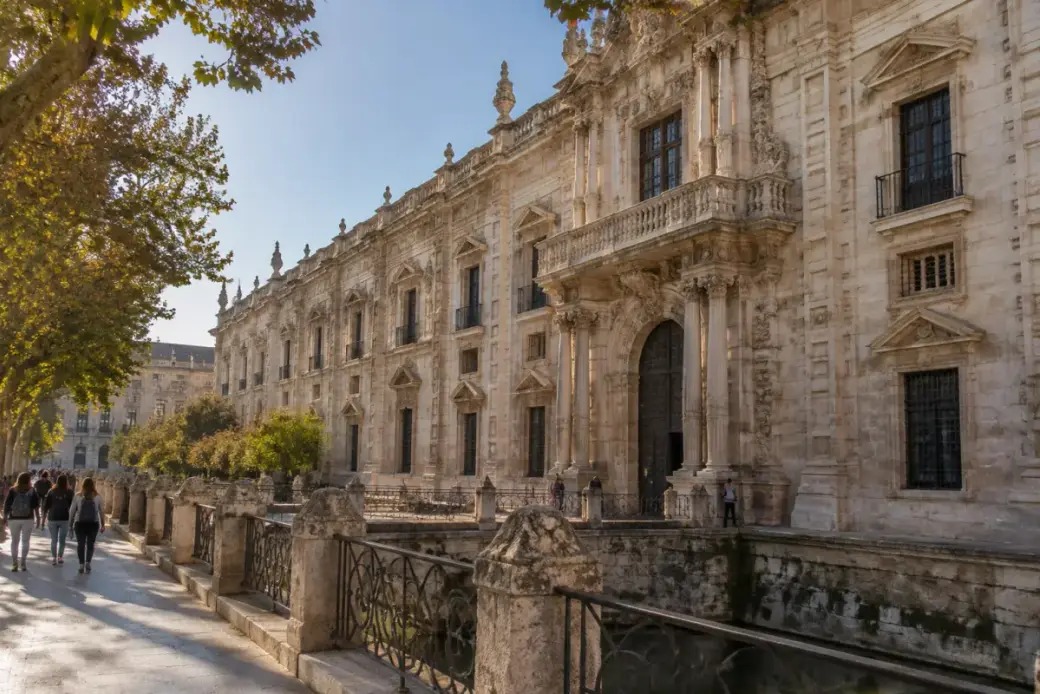
Few cities have inspired so many operas. Bizet’s «Carmen», with the cigar maker from the Tobacco Factory, is set here, as are Rossini’s «The Barber of Seville», Mozart’s «Don Giovanni» and «The Marriage of Figaro», Beethoven’s «Fidelio» and the opening of Verdi’s «La forza del destino». Most of their composers never set foot in the city: for them Seville was the ideal stage for passion, intrigue and exoticism.
Since 1991 the city has had its great opera house, the Teatro de la Maestranza, by the river, which programmes opera, symphonic music and dance. Walking through the former Tobacco Factory, now the University, thinking of Carmen is a good way to bring music and history together.
Classical and sacred music
For centuries the Cathedral was one of Spain’s great musical centres, with chapel masters such as Francisco Guerrero in the sixteenth century. In the nineteenth, Sevillian tenor Manuel García created the role of Almaviva in «The Barber of Seville», and in the twentieth the composer Joaquín Turina, born in the city, brought its light and corners into symphonic and piano works.
Today symphonic life revolves around the Maestranza and the city’s orchestra, and churches and convents host organ and early music concerts, especially during Lent.
Andalusian rock, sevillanas and processional marches
In the 1970s, Seville bands such as Triana and Smash blended rock with flamenco and created what became known as Andalusian rock, one of the most original contributions of Spanish music at the time. That fusion continued in later decades with other artists who mixed flamenco guitar, blues and rock.
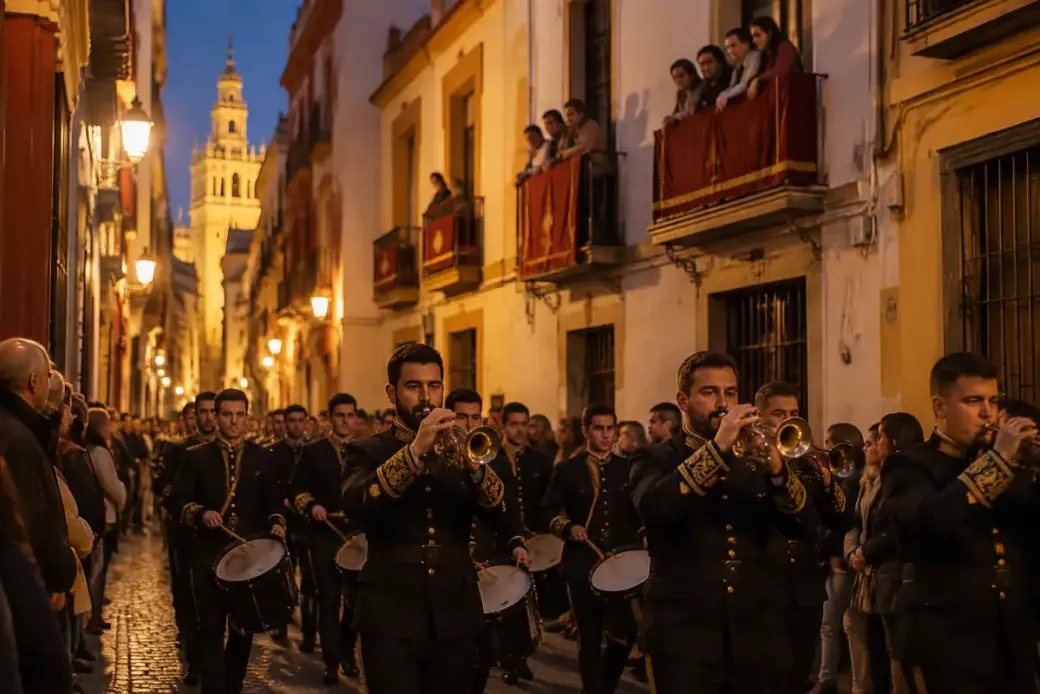
Other music belongs to the street. Sevillanas are danced at the Fair, on pilgrimages and at any celebration. And in Holy Week the city sounds of bugle-and-drum bands, chamber music and processional marches; «Amarguras», composed in 1919, is for many Sevillians the most moving of all.
Where to listen to music in Seville
- FlamencoPeñas, tablaos and small venues, especially in Triana and the centre. In even years, the Bienal fills the city in autumn.
- Opera and symphonicThe Teatro de la Maestranza, by the river.
- Early music and organConcerts in churches and convents, especially during Lent.
- Live musicVenues and bars around the Alameda de Hércules; see alternative Seville.
- Holy WeekThe bands that accompany the floats: the most listened-to music of the year. See our Holy Week guide.
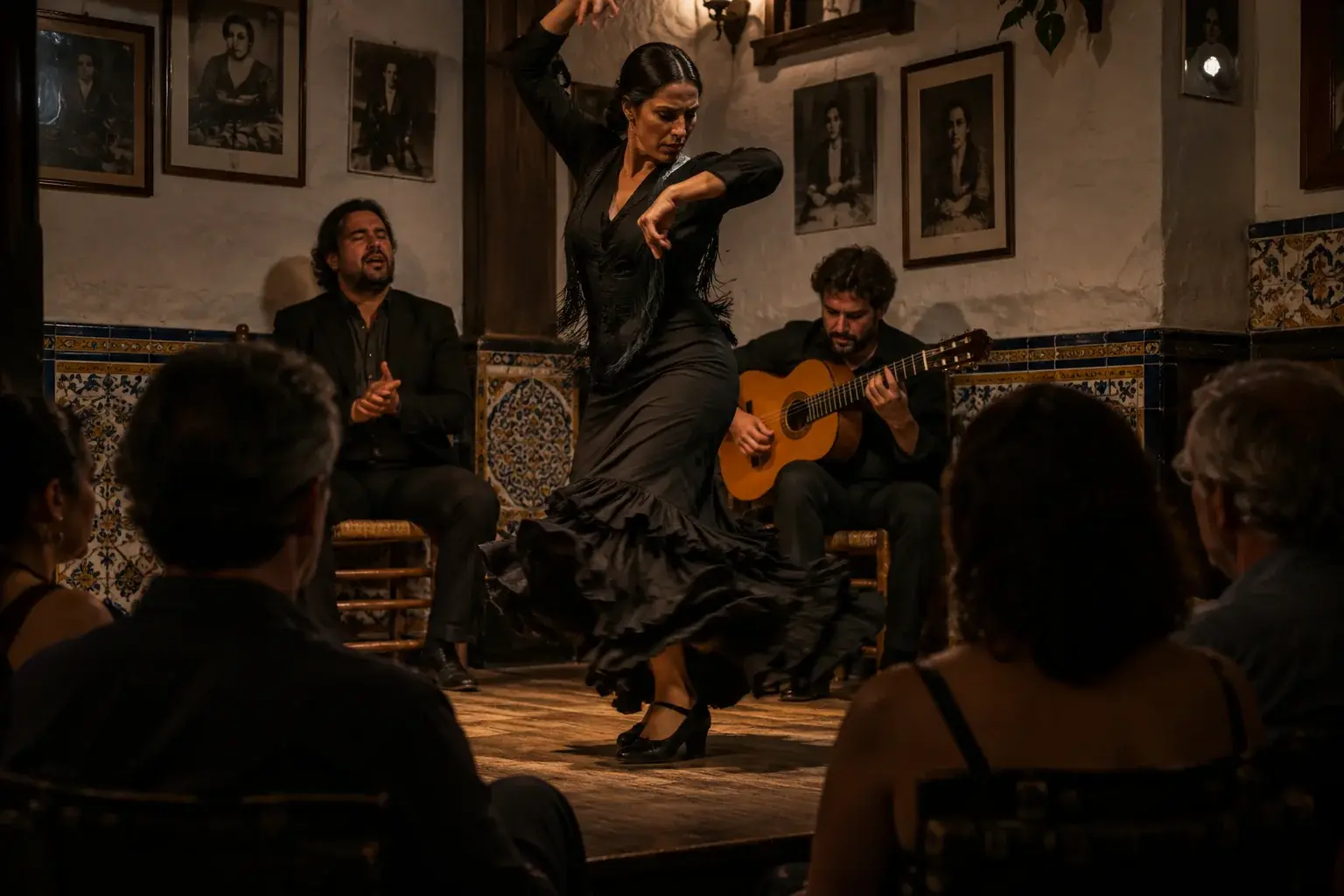
Experience
Intimate flamenco in Triana
A show for a small audience in Seville’s most flamenco neighbourhood, with María handling the booking.
See the experienceFrequently asked questions
Where can I see authentic flamenco in Seville?
In peñas, small venues and tablaos, especially in Triana and the centre. An intimate format with a small audience lets you experience it up close.
Which operas are set in Seville?
Among the best known are «Carmen», «The Barber of Seville», «Don Giovanni», «The Marriage of Figaro» and «Fidelio».
What is Andalusian rock?
A 1970s movement that blended rock and flamenco, with Seville bands such as Triana and Smash among its pioneers.
Are sevillanas flamenco?
Not exactly: they are a popular couples’ dance closely tied to the Fair and pilgrimages, although they share a world with flamenco.
You may also like
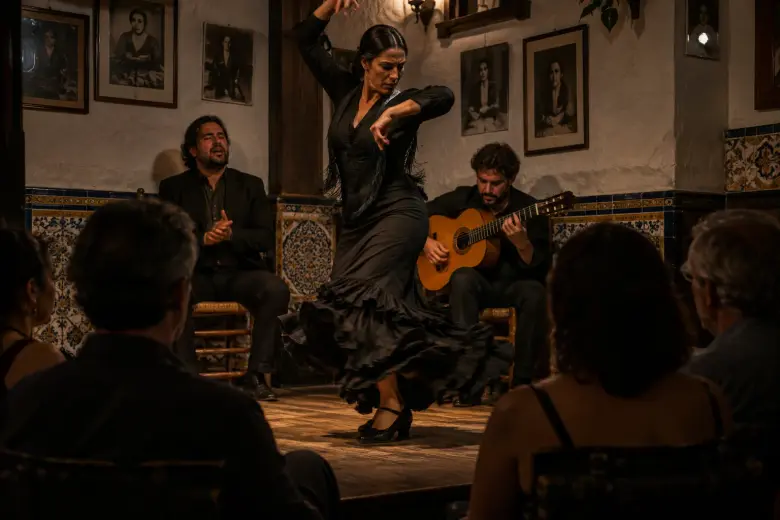 Experience · Show in TrianaIntimate flamenco in TrianaA flamenco show for a small audience in the heart of Triana.View page
 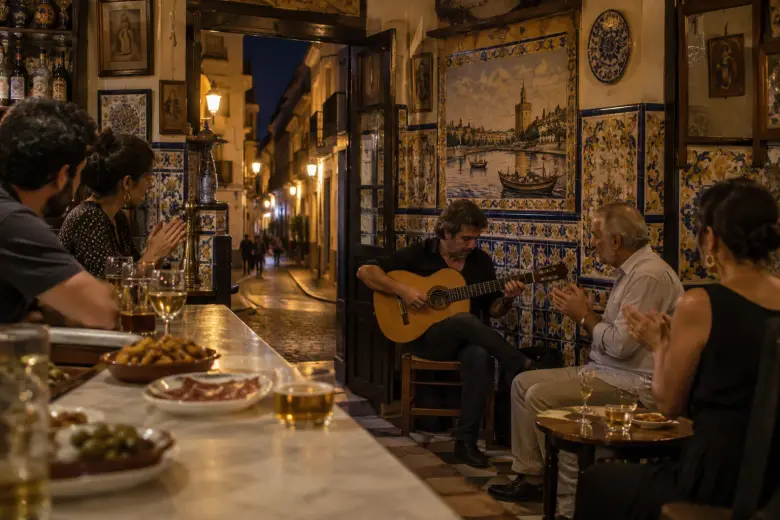 Private tour · Triana at duskFlamenco and tapas in TrianaFlamenco history, ceramics and tapas in Triana, ending with intimate flamenco.See the tour
 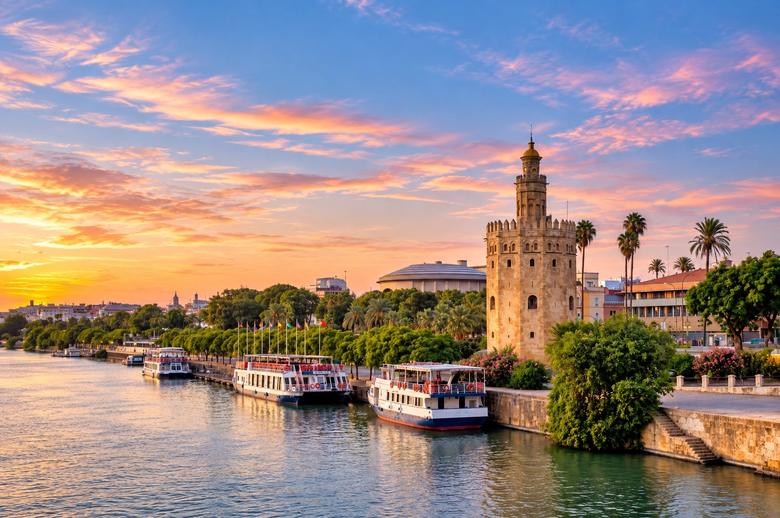 Neighbourhoods · TrianaTrianaCeramics, the river and a distinct identity across the bridge.Read the guide
 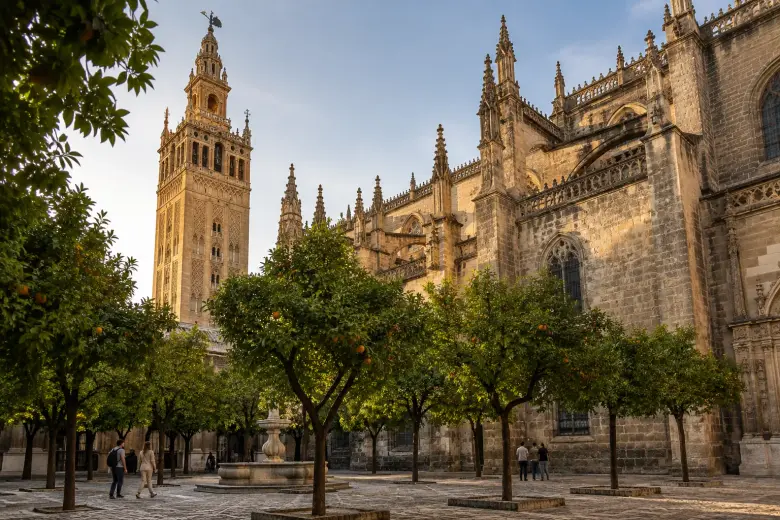 Understand SevilleHistory of SevilleFrom Tartessos to Expo 92: the history of Seville told era by era.Read the guide
Shall we talk about your visit?
Tell María when you are coming, how many of you there are and what interests you. She will reply with a clear proposal.
Ask María about a tour