
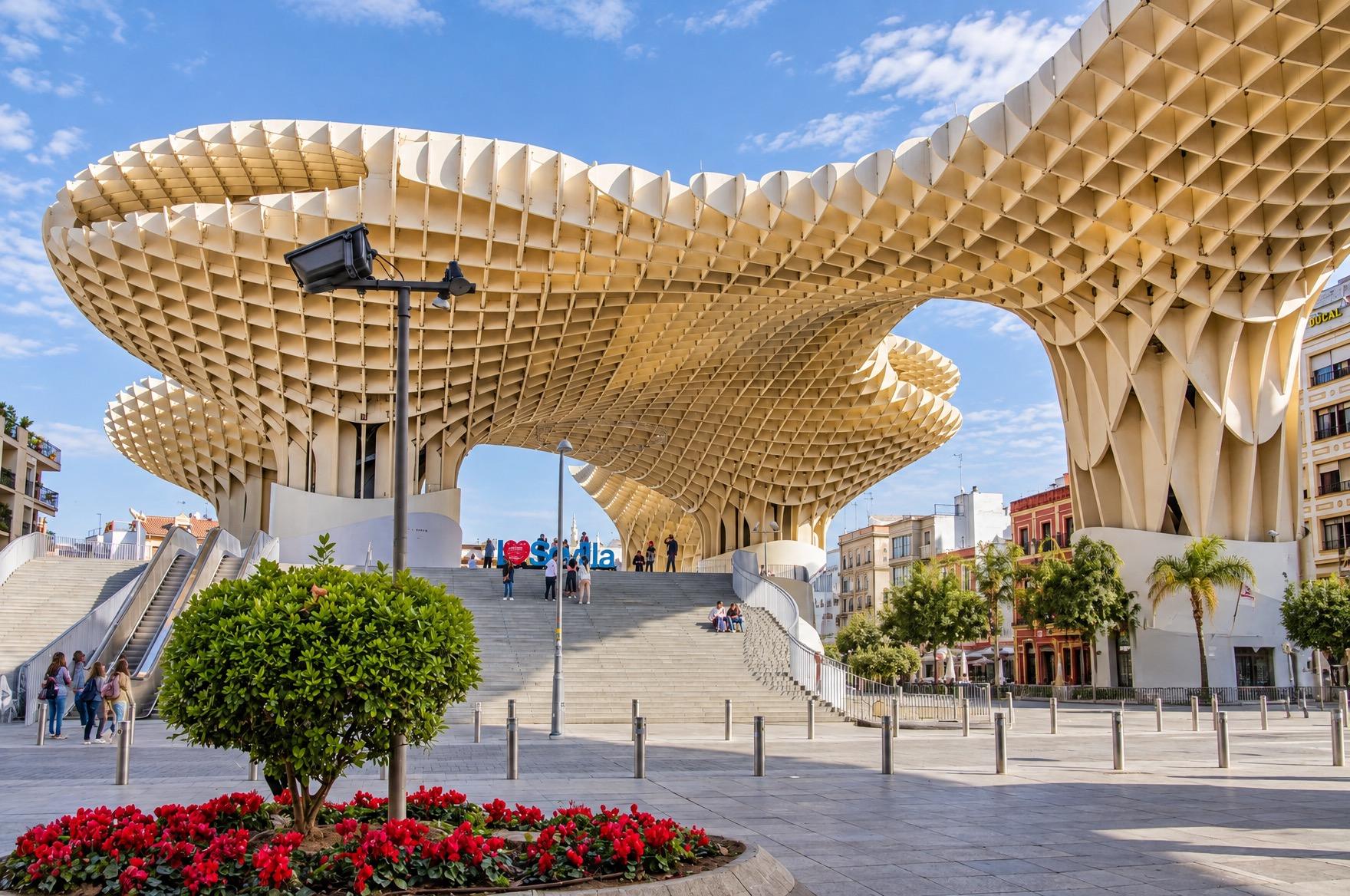
Neighbourhoods · La Macarena
La Macarena: what to see and how to explore the neighbourhood
Almohad walls, a devotion that moves the whole city and market streets where Seville still lives at its own pace.
La Macarena is the neighbourhood in the north of the old town. The essentials: the Macarena basilica, the arch and the best-preserved stretch of the city wall, the Andalusian Parliament and Calle Feria. Walk there from the Setas and allow two hours.
What to see nearby
A few minutes away is the Alameda de Hércules, with its Roman columns and café terraces. To the south, the Setas de la Encarnación and their Antiquarium, with Roman remains beneath the square. And to continue with neighbourhood Seville, cross the river to Triana.
Essential history
| Date | Milestone |
|---|---|
| 12th century | The Almohads extend the wall that still stands beside the arch. |
| 1546 | Construction of the Hospital de las Cinco Llagas begins. |
| 1574 | The Alameda de Hércules is created, one of Europe’s first public promenades. |
| 20th century | The present Macarena basilica is built. |
| 1992 | The Andalusian Parliament moves into the former hospital. |
What defines the neighbourhood
La Macarena is neighbourhood Seville: less monumental than the southern centre and far more everyday. The longest stretch of the Almohad wall survives here, and devotion to the Esperanza Macarena, whose brotherhood is based in the basilica, sets the local calendar.
It is also the Seville of markets, Mudéjar churches and old convents, and a good place to see how the city lives away from the queues.
Suggested walking route
About two hours from the Setas.
- Setas de la EncarnaciónStarting point; Roman remains lie beneath.
- Calle Feria and its marketOne of the liveliest streets in the north of the centre.
- San Luis de los FrancesesJesuit Baroque on Calle San Luis.
- Macarena arch and basilicaThe gate in the wall and the Esperanza.
- City walls and ParliamentThe Almohad stretch and the former Hospital de las Cinco Llagas.
Editorial map: it shows the logic of the walk.
Five places explained
Macarena basilica
Home of the brotherhood of the Esperanza Macarena, one of the most venerated images in the city. Its museum helps you understand Seville’s Holy Week.
Macarena arch
One of the gates of the old city wall, remodelled in the 18th century.
City walls
The best-preserved stretch of the Almohad wall, with its towers, between the arch and the Córdoba gate.
Andalusian Parliament
Housed in the former 16th-century Hospital de las Cinco Llagas, one of Seville’s great Renaissance buildings.
Calle Feria
A food market, long-established shops and, on Thursdays, the traditional El Jueves flea market.
When to go
- Thursday morningTo see the El Jueves flea market on Calle Feria.
- MorningsMarkets are open and streets are busier.
- Holy WeekThe early hours of Good Friday are the neighbourhood’s most intense moment. Plan well ahead.
Mistakes and clichés
- Only visiting the basilicaThe neighbourhood deserves a longer walk through its streets and markets.
- Thinking it is farIt is about a 15-minute walk from the Setas.
Want to see a less touristy Seville?
With three days, La Macarena fits into our three-day itinerary. And if you would like a guide, see our guided tours in Seville.
Frequently asked questions
How do you get to La Macarena from the centre?
On foot from the Setas de la Encarnación, about 15 minutes via Calle Feria or Calle San Luis.
What is El Jueves?
A traditional antiques and second-hand market held on Thursdays on Calle Feria.
Can you visit the basilica?
Yes, and it has its own museum. Check opening times before you go.
What is nearby?
The Alameda de Hércules and the Setas de la Encarnación.
You may also like
 Guide · 3-day itineraryWhat to see in Seville in 3 daysThree days by area: monuments, the river and a more local Seville.Read the guide
  Private tour · StoriesStories and legendsKings, lovers and betrayals: the Seville that is told.See the tour
  Neighbourhoods · Santa CruzSanta CruzA walking route through the old Jewish quarter and its squares.Read the guide
  Official Tourist GuideGuided tours in SevilleAll of María’s private tours of Seville.View page
Shall we talk about your visit?
Tell María when you are coming, how many of you there are and what interests you. She will reply with a clear proposal.
Ask about a private tour